Why Harris Is Worth Visiting

The Isle of Harris suffers from one of the oldest problems in travel writing.
It is too easy to make it sound stupid.
White sand. Turquoise water. Empty beaches. Hebridean light. A place so pure, so still, so spiritually improving that merely stepping off the ferry apparently causes your blood pressure to drop and your photographs to become much better than you deserve.
This is nonsense. Or rather, it is the decorative slice of the truth.
Yes, the beaches on Harris are extraordinary. The colour of the water can look faintly absurd, as though somebody from a much warmer latitude has misplaced it here by administrative error. The sand is pale enough to make other beaches look half-hearted. The space is real too. The scale. The emptiness. The sense that the land and sea have pushed human life to the margins and kept the larger share for themselves.
But that is not the whole story. It’s not even the best part.
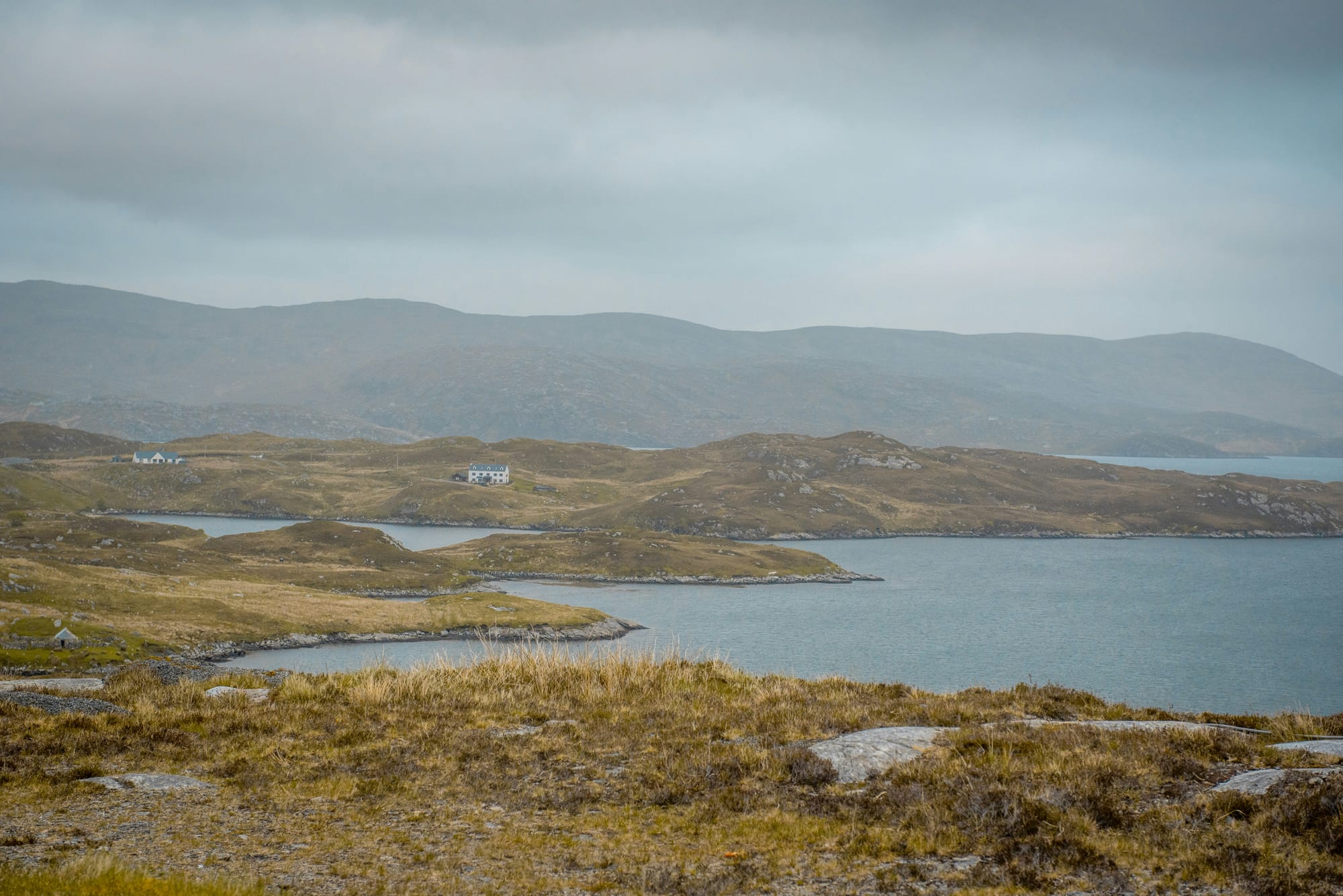
Because Harris is not some soft-focus island fantasy where everyone wanders about in linen staring meaningfully at the horizon. It is an exposed, weather-beaten piece of the Outer Hebrides held together by roads, ferries, harbours, stone, stubbornness, and the practical rhythms of island life. It is wind off the Atlantic. Diesel in the harbour air. Rain arriving sideways after a morning that had looked perfectly respectable. It is long drives through land that feels both stripped bare and densely itself. Ancient rock. White surf. Burning whisky. That is Harris.
Not a fantasy. A place.
And places are always better than fantasies.
Harris is worth visiting not because it is pretty in some soft, uncomplicated way, but because it feels elemental. Exposed. Half-cleared of rubbish. You do not come here to be entertained by attractions lined up obediently for your convenience. You come for roads that narrow into weather. Beaches that are better because they are cold and mostly useless for any normal idea of leisure. Hills that rise dark above lochs and moor. Villages that know very well you are passing through and do not seem especially alarmed by it.
Harris is not trying to charm you.
That is one of the reasons it does.
Let's Talk About The Roads.
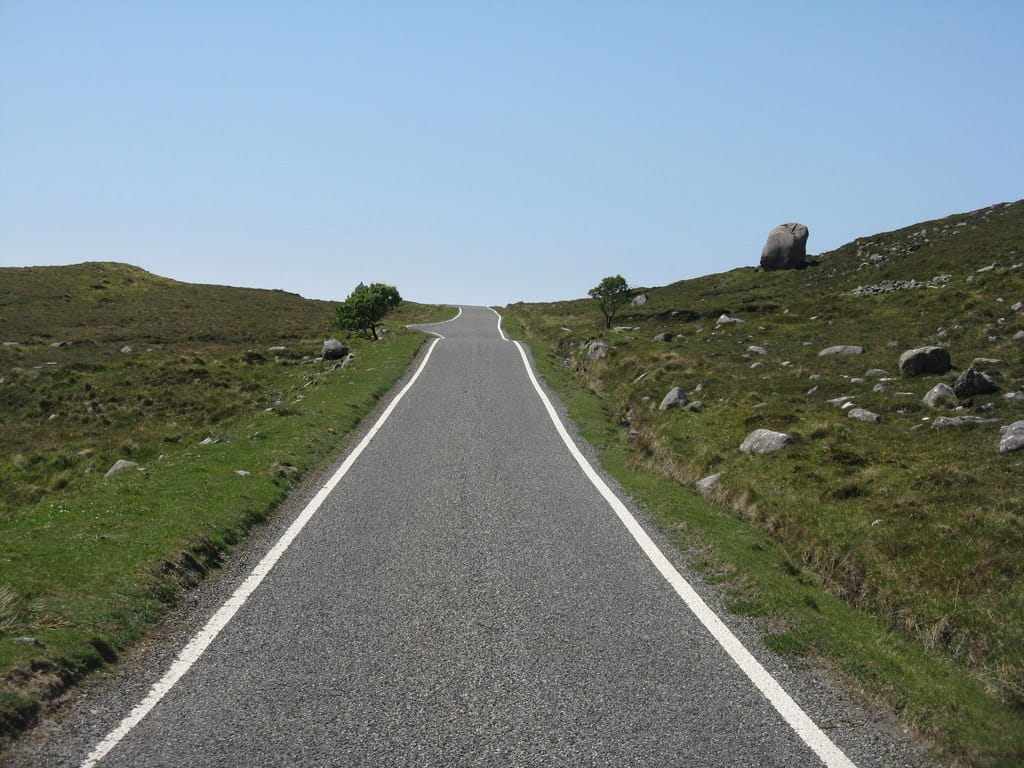
Harris is a road island.
That is the first thing to understand.
Not in the sense that it lacks walking, hills, beaches, or depth. It has all of those. But the way you experience Harris is through movement. Through driving. Through the long roads that pull you around sea lochs, over rises, through rock and bog and sudden flashes of water that look almost tropical until the wind reminds you exactly where you are. This is not a place that reveals itself in one clean cinematic sweep. It unfolds in sections. A bay here. A strip of moor there. A cluster of houses. A church. A headland. A stretch of emptiness. Another turn. More sea.
Harris makes sense as a sequence.
Ferry to harbour. Harbour to road. Road to beach. Beach back to road. Road down to Rodel. Road westward until the world feels thinned out to rock, sky, and Atlantic. All of it shaped not only by scenery but by timing, weather, distance, and the slight but constant island awareness that if you want to get somewhere, you will need to commit to it.
The island is sparse. That too is part of its strength. There are not endless distractions. Not much clutter. Not many places for the land to hide behind overdevelopment or overexplanation. Harris feels half-stripped of unnecessary things. What remains is rock, machair, water, hill, road, harbour, weather. The fundamentals.
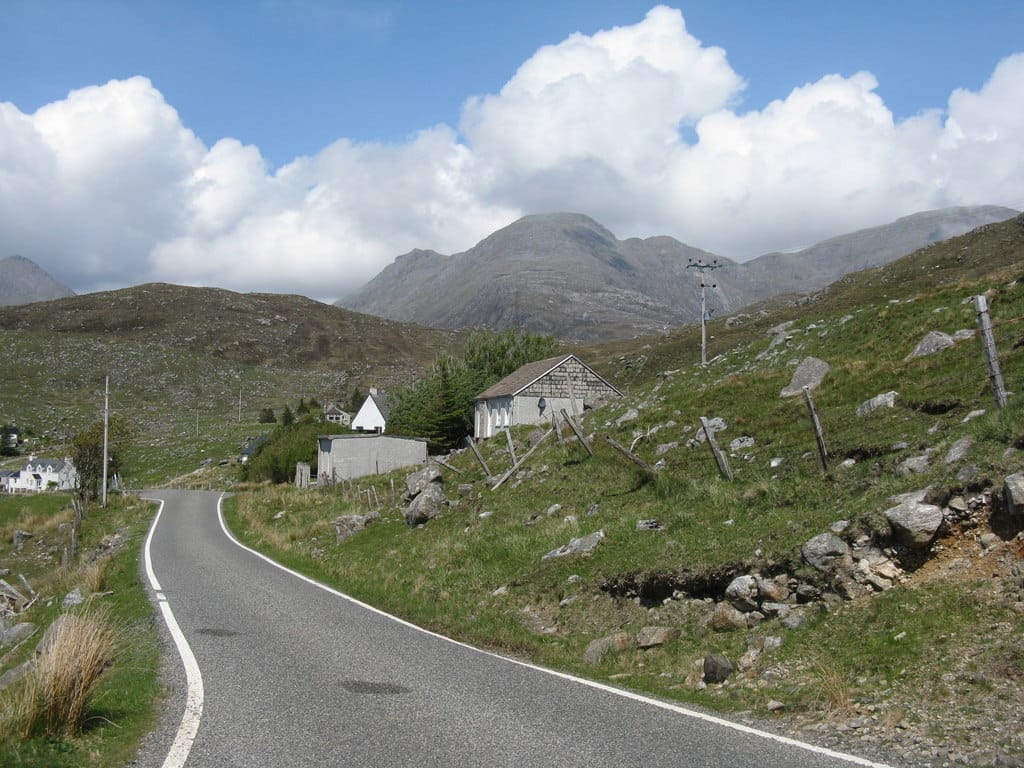
And because the fundamentals are so strong, everything else sharpens around them. A house against a slope. A small pier. A road sign. Smoke from a chimney. A van parked by the shore. The whole island has the effect of reducing life to forms that still make sense.
But do not mistake sparseness for gentleness.
Harris is not gentle. It can be quiet, yes. Still, sometimes. But peace is too sentimental a word for a place so exposed. This is an island where the weather remains the dominant personality. The wind has the final say. The sea presses in from every side. The land is compelling in the same way certain faces are compelling. Because of the bone structure. The severity. The lack of compromise.
Tarbert
Tarbert is not the part of Harris you photograph for your wall calendar.
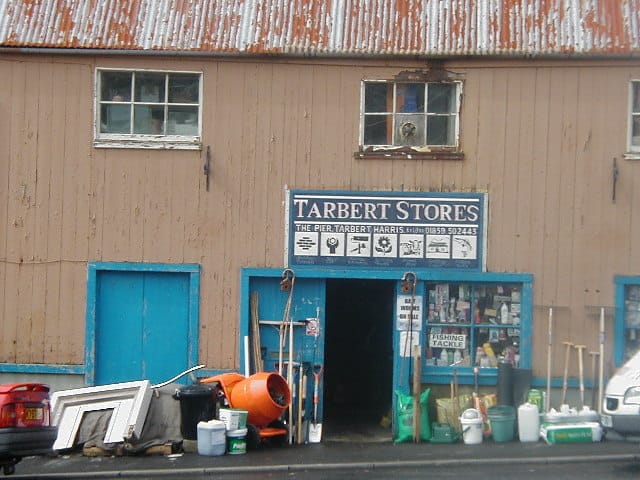
It is where the island still functions as an island rather than a fantasy. The harbour. The ferries. The practical movement of people, goods, vehicles, work, and weather. The sense of arrival and departure. Diesel in the air. Water slapping against the harbour edge. A place where roads converge, plans adjust, and the day either starts or resets itself.
You need Tarbert because it tells the truth.
It reminds you that islands are systems. Ferries. Timing. Fuel. Shops. Delivery lorries. Pubs. Hotels. Harbour walls. Wet pavements. Cars queued with luggage and shopping bags. Paradise, if that is the daft word you insist on using, still needs a timetable.
Yet, Tarbert has mood all the same.
On a grey day especially, with the harbour under cloud and the hills rising around the water, the place has a stern island atmosphere that no amount of white-sand fantasy can replace. It feels real. Functional, yes. But real in the proper sense. Not decorative. Not performative.
And because Tarbert is so practical, it throws the rest of Harris into sharper relief. You leave the harbour, take the road, and the island starts opening in long measured gestures. Sea lochs. Rock. Bends. Rising ground. Light moving over water. Tarbert is the hinge between the managed business of getting here and the much less manageable business of being here.
The Beaches
Let’s get this out of the way: the beaches of Harris are among the best reasons to come here.
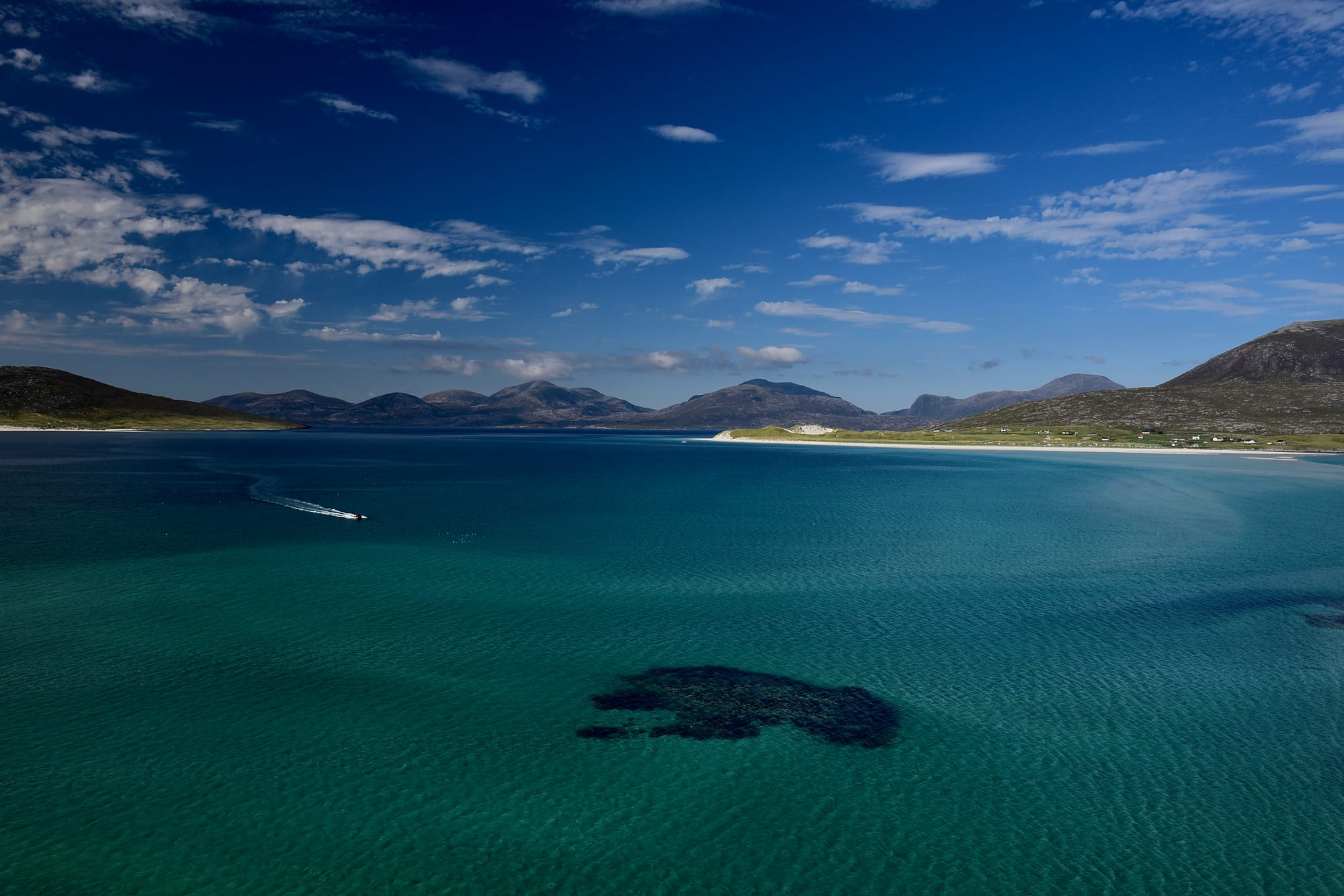
But not for the reasons usually given.
The usual language collapses almost immediately. Paradise. Caribbean-looking. Untouched. Tranquil. All those lazy words dragged out by people who seem faintly annoyed that they are not being paid by the cliché.
The beaches of Harris are better than that because they are stranger than that.
Luskentyre. Scarista. Seilebost. Horgabost. Name them properly if you like, and you should, because the names belong to the place. But what matters more is the sensation of arriving at them in actual Hebridean conditions. Wind flattening the grass. Cold getting into your hands if you stand still too long. Sand moving in thin stinging drifts across the surface. The sea looking absurdly blue in one moment, then iron-grey the next when the light shifts. Hills behind. Islands beyond. Huge bands of open space between you and anything resembling shelter.
That is not tropical. It is Hebridean. A much better thing.
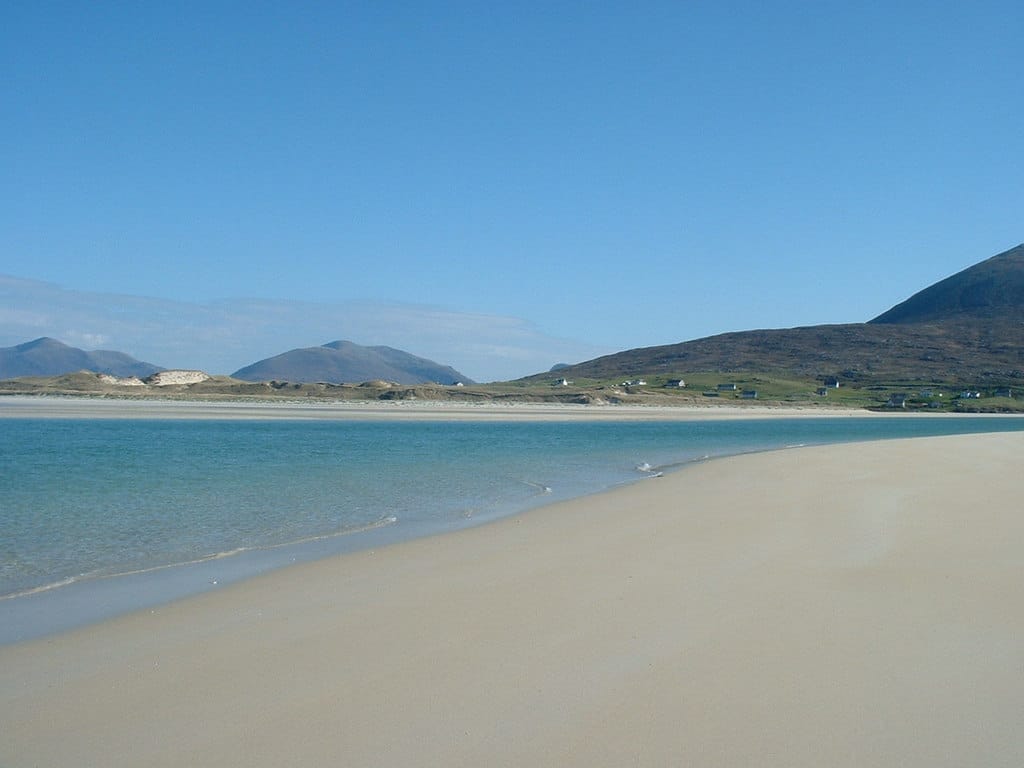
The beaches are not improved by pretending they are somewhere else. In fact, what makes them so extraordinary is the collision between appearance and physical fact. The water may glow. Fine. It is still cold enough to remind you that this is the North Atlantic and not a travel agent’s fever dream. The sand may look inviting. It is still attached to a landscape of machair, moor, rock, rain, and weather systems with no interest in your beach-day expectations.
And the emptiness changes your sense of scale. These are beaches where human presence looks temporary and undersized. A few figures by the tide can seem almost accidental against the broad pale sweep of everything around them. The beaches on Harris are not good because they are “perfect.” They are good because they feel elemental and faintly improbable. As if light and weather struck a brief uneasy bargain and the island decided to allow it.
They also reward movement. Drive to one, then another. Stop. Stand in the wind. Watch how the colour changes. See how one beach opens out like a public statement while another feels more tucked into the island’s shifting geometry of bay and slope and road. Harris is full of these transitions. That is why you remember the drive almost as vividly as the sand itself.
St Clement’s Church
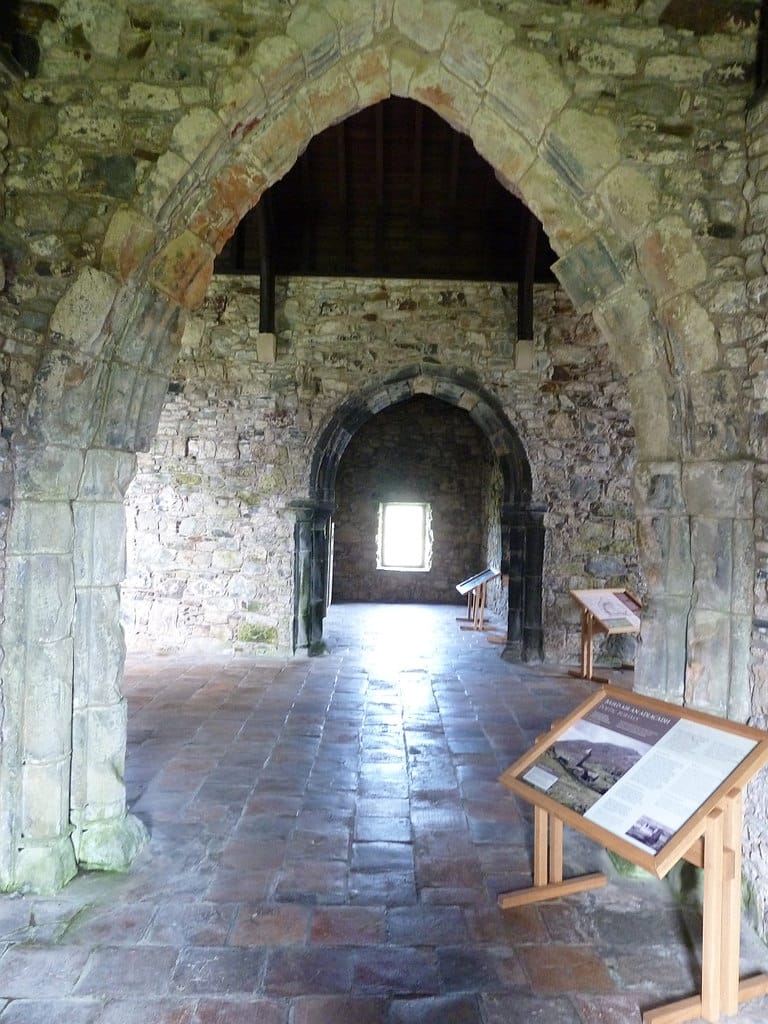
If the beaches are where Harris blows out into light and space, St Clement’s Church at Rodel is where it narrows into gravity.
This is one of the most powerful places on the island. It works because there is nothing soft about it. No decorative charm. No pretty little romance of old stone made comfortable for visitors. St Clement’s has age, shape, and seriousness. It stands there at Rodel with the air of something that has outlasted the need to explain itself. Historic Environment Scotland describes it as “the grandest medieval building in the Western Isles,” and for once that kind of praise does not feel inflated.
The stone is the first thing. The weight of it. The way the church feels built not for display but for permanence. Then there is the setting. Down at the southern end of Harris, where the road itself begins to feel like a commitment, the church stands with sea and land around it in a way that sharpens its isolation rather than softening it.
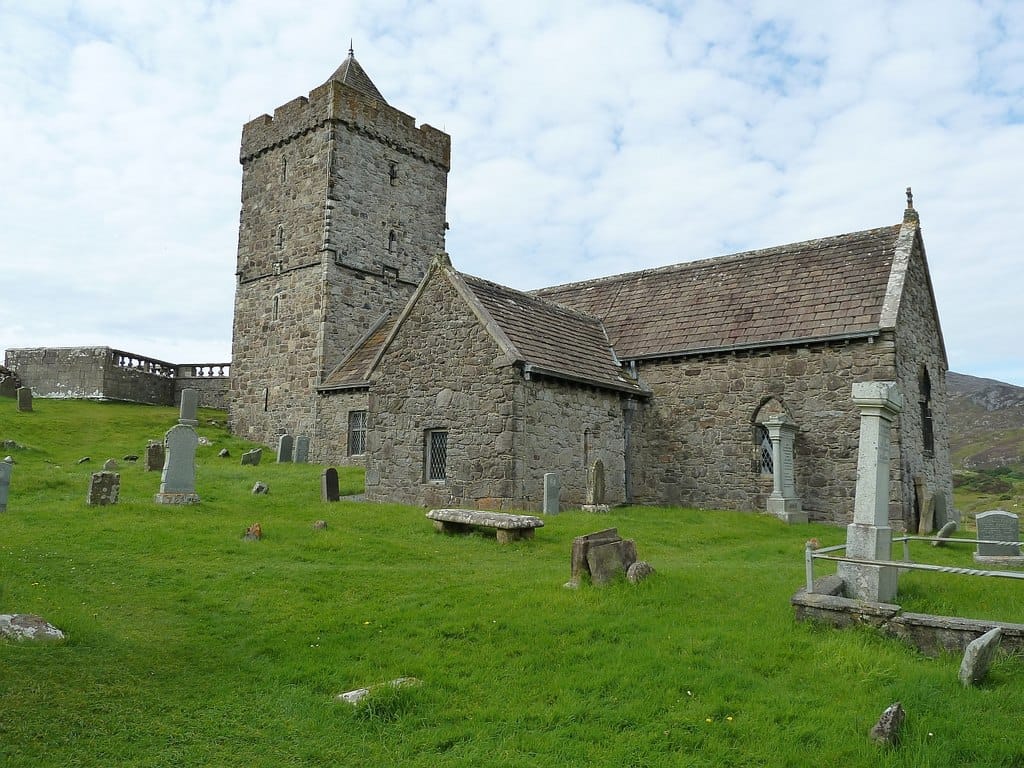
Inside, the mood deepens. Not theatrical. It doesn’t need to be. The power of St Clement’s comes from concentration. Age held in stone. Faith, authority, death, time. The place has the stillness that only serious buildings have. Not peaceful stillness. Denser than that. A stillness with mass.
It is one of the clearest reminders on Harris that this island is not only a landscape. It is also a human place with long memory. A place where weather and sea dominate the present, but stone still records the older terms of life and power.
Harris Tweed
You cannot write about Harris honestly and ignore Harris Tweed.
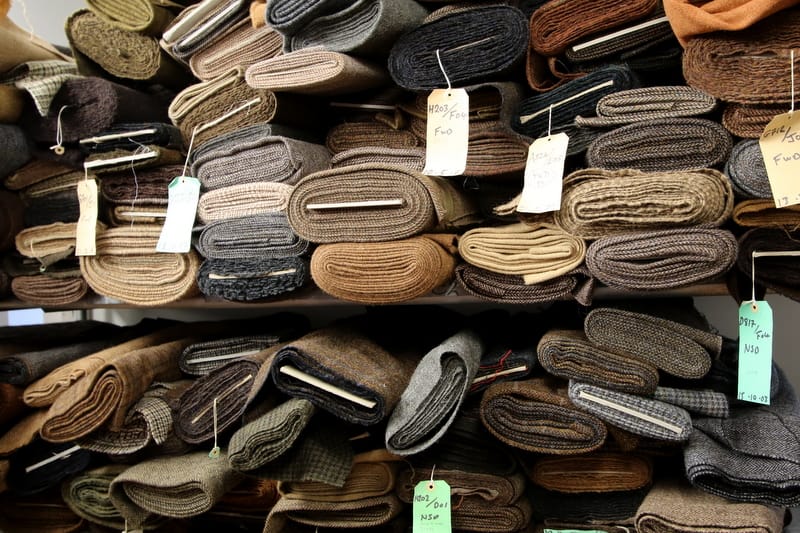
Not because it is a branding exercise, but because it belongs here. Properly. The cloth is not just associated with the island. It is bound to the wider Outer Hebrides by law. The Harris Tweed Authority says Harris Tweed must be handwoven by islanders at their homes in the Outer Hebrides, finished there, and made from pure virgin wool dyed and spun there. It is the only fabric in the world with its own Act of Parliament.
Which sounds like the sort of detail people mention too reverently in gift shops.
But the interesting part is not the legal wording. It is the logic behind it. Harris Tweed comes out of the same conditions that shape everything else on the island: bad weather taken seriously, long winters, hard work, practical intelligence, and a culture that learned early the difference between decoration and usefulness. Good tweed, like a good island road or a well-built wall, has purpose first. Beauty arrives by discipline.
That is why it fits Harris so well.
Tough. Useful. Textured. Better up close than at a distance. Full of small shifts in tone and fibre that only make sense when you stop trying to reduce the place to one clean image. Harris Tweed is not a souvenir of the island. It is one of the ways the island keeps speaking once you’ve gone inside.
The food and drink
A place becomes real not only through the grand sights, but through the practical rituals that hold a day together.
That is why a bacon roll at The Butty Bus matters.
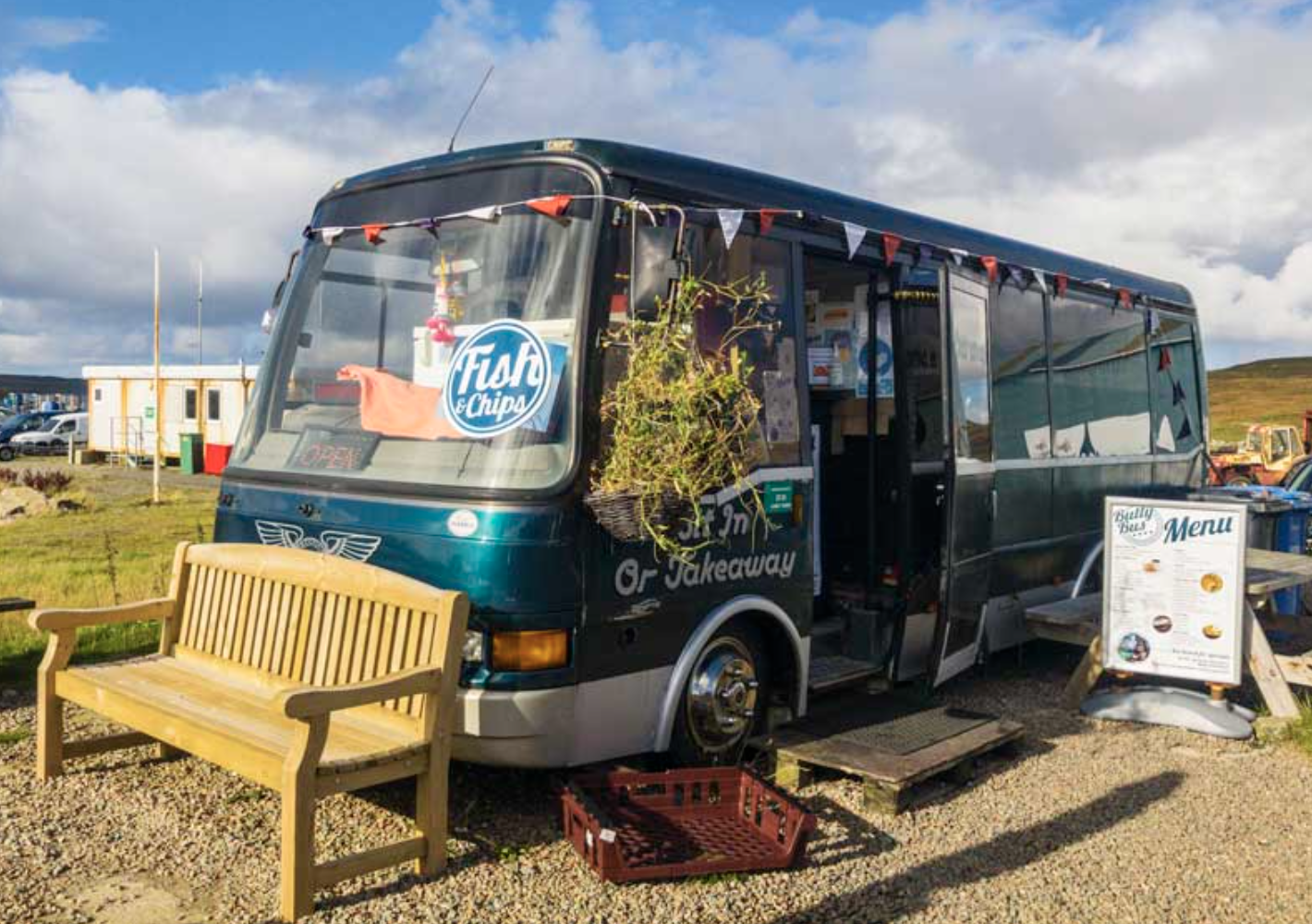
Not because it is some elevated culinary event. God no. It matters because after a wet morning, a long drive, or just the ordinary business of being on an island where wind and distance do a fair amount of the talking, something hot, salty, and immediate is exactly what the body understands. The Butty Bus belongs to the proper texture of Harris. One of those places that drops you back into the real business of travel: hunger, heat, a takeaway coffee, steam in cold air, hands around something warm. Ask the owner about the weather. He knows. Not in the vague, conversational way people claim to know weather, but properly. What it’s doing, why it’s doing it, and what it’s likely to do next. And if you happen to be on the island on a Friday, do yourself a favour and order a bowl of Cullen skink soup - you'll be talking about it for years afterward.
Same with a dram at The Harris Hotel in Tarbert.
Not as some staged island experience for visitors collecting “authenticity,” but as a real end-of-day pleasure. You’ve been out on the roads. Down to the beaches. Across the island in shifting weather. Maybe the ferry has kept you half aware of departure and return all day. Maybe you’ve had enough wind and brightness and empty sand to feel slightly hollowed out by it. Then you step inside, out of the air, and have a dram. The Harris Hotel has been family-run for generations and sits right in Tarbert where island journeys naturally bunch together and pause.
That is how Harris comes back into human scale.
Places like that matter because island travel needs rooms that gather the day back in. Places where weather stays outside for a while and the rough edges of movement are softened by wood, warmth, glass, conversation, and the knowledge that tomorrow the island will still be there under whatever sky it chooses to wear.
None of this is “foodie.” That word should be thrown into the Minch. This is just how a real place is lived. Bacon roll, dram, harbour, road, rain, repeat.
The road to Hushinish
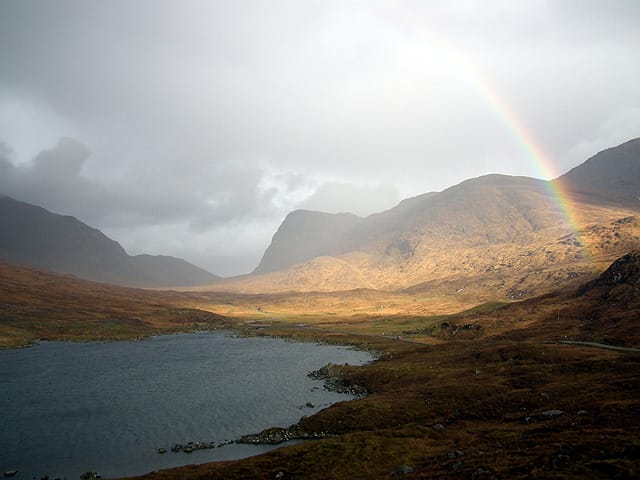
Then there is the road to Hushinish.
One of the best roads on Harris, because it refuses to be reduced to a destination. Hushinish lies out on the west coast, reached by a long single-track road that narrows the world by degrees until it feels as though the island is running out of language and simply handing the rest over to rock, water, and sky. Outer Hebrides tourism material pitches it as one of the island’s remote western corners, and that is exactly right. Remoteness is not a side note here. It is the point.
You drive it properly or not at all. Past lochs, sheep, weather, rough ground, and that peculiar Hebridean sensation that the road is not leading you to an attraction so much as thinning everything unnecessary out of the day. By the time you reach Hushinish, the place already has its grip in you.
The beach is excellent, yes. The setting is superb. Scarp lying offshore only deepens the sense of having reached the edge of something. But the real pleasure is the approach. That drawn-out movement into remoteness, where Harris starts feeling less like an island guide and more like the margin of a map.
What most people get wrong about Harris
They romanticise it to death.
That’s the problem.
They turn Harris into an idea of escape. A peaceful paradise. A pure island refuge from modern life. Somewhere to breathe, slow down, reconnect, and perform all the usual rituals of tasteful withdrawal from the world.
Which misses the point completely.
Harris is not peaceful in any sentimental sense. It can be quiet, yes. Spacious, certainly. But the island is shaped by exposure, logistics, and weather. By ferries and roads. By practicalities. By the fact that the sea is not decorative and the land is not arranged for your emotional convenience. Harris is not a blank page onto which visitors can project whatever slow-living fantasy they brought with them in the car.
It has its own terms.
That is why it is good.
The beaches are extraordinary because they are attached to a place that can be severe. St Clement’s matters because it sits in an island landscape that still has room for age and gravity. Tarbert matters because paradise with a ferry timetable is more interesting than paradise without one. The roads matter because movement through Harris is inseparable from understanding Harris.
People also underestimate the physicality of the place. They think of it visually first. A mistake. Harris is tactile. Wind on the face. Sand underfoot. Wet jacket sleeves. Salt in the air. Stone under hand. Diesel near the harbour. A mug warming your palms. A dram after dark. This is a place best understood through contact, not simply admiration.
And that is why it stays with you.
Not as some pastel Hebridean fantasy.
As something better. Wind, salt, stone, road, harbour water, rain, white sand, dark hill. A place that does not flatter you, but sharpens you a little if you let it.