The Isle of Skye Without The Fairy Tale Nonsense

Everybody sells Skye as if it were some kind of Celtic hallucination.
A place of soft light, empty roads, soulful silence, and names that sound like they were invented by a child staring into a puddle. You’ve seen the formula. Mist. Sheep. Cliffs that appear on Instagram so often they no longer look real.
A few lines about ancient mystery. A few more about wild beauty. Then a carefully edited photo of someone standing on a ridge in a mustard jacket, staring nobly into weather they almost certainly waited twenty minutes to arrive.
That version of Skye is not entirely false.
It is just incomplete.
The Isle of Skye is beautiful, yes. But soft? Not remotely. It is wet, awkward, windy, over-photographed, logistically irritating, and often clogged with people all heading to the exact same “untouched” viewpoint. It is the kind of place that punishes bad planning, laughs at your timetable, and looks better in foul weather than in polite sunshine. Which is part of the point.
Skye is not a fantasy set. It is a hard piece of land with a public relations problem. Too many people arrive expecting enchantment and leave having learned something more useful: that a place can be dramatic without being charming, famous without being easy, and unforgettable without trying very hard to please you.
That is why Skye works.
Not because it feels dreamlike, but because it doesn’t. Because the roads are narrow. Because the distances are deceptive. Because the rock looks old enough to resent you. Because the wind has the personality of a personal insult. Because when the light goes bad, the whole island seems to step into its proper shape.
So yes, go to Skye. Absolutely.
Just don’t go looking for a fairy tale.
What Skye actually is...
The Isle of Skye is one of the most talked-about places in Scotland, and for obvious reasons. It has a concentration of dramatic landscapes so absurdly high that other regions would dine out on one of them for centuries. Here, they seem to arrive one after another in a procession of cliffs, ridges, sea views, shattered escarpments, dark hills, and roads that appear to have been laid down by someone with a grudge.
But Skye is not a place you drift through. It is road-based. That matters.
You do not wander from one great sight to the next with some effortless cinematic rhythm. You drive. You wait behind campervans. You pull into passing places on single-track roads. You double back. You misjudge distance. You learn, eventually, that ten miles on Skye is not the same thing as ten miles anywhere else. The island looks compact on a map. That map is lying to you.
Then there’s the weather. Not the brochure weather. The real weather. Low cloud. Sideways rain. Sudden brightness followed by a sky the colour of wet slate. You can wake up to something almost cheerful and by lunchtime be standing in a wind that feels targeted. Skye improves when you stop treating weather as an inconvenience and start understanding it as one of the main characters.
The famous places can be busy. Very busy. That is the tax you pay for instagram-worthy beauty. Old Man of Storr, the Quiraing, the Fairy Pools, Neist Point. None of these are secrets. You will not be the first person to have the idea. But that does not mean they are overrated. It means you need to approach them with the right expectations. Early starts help. So does emotional maturity.
More importantly, Skye gets better when you stop asking it to entertain you every second. It is not just a series of viewpoints. It is a landscape of mood, distance, and pressure. The roads matter. The weather matters. The gaps between the headline sights matter. A bad guide makes Skye look like a list. A good trip reveals it as a place.
The places actually worth your time
Old Man of Storr
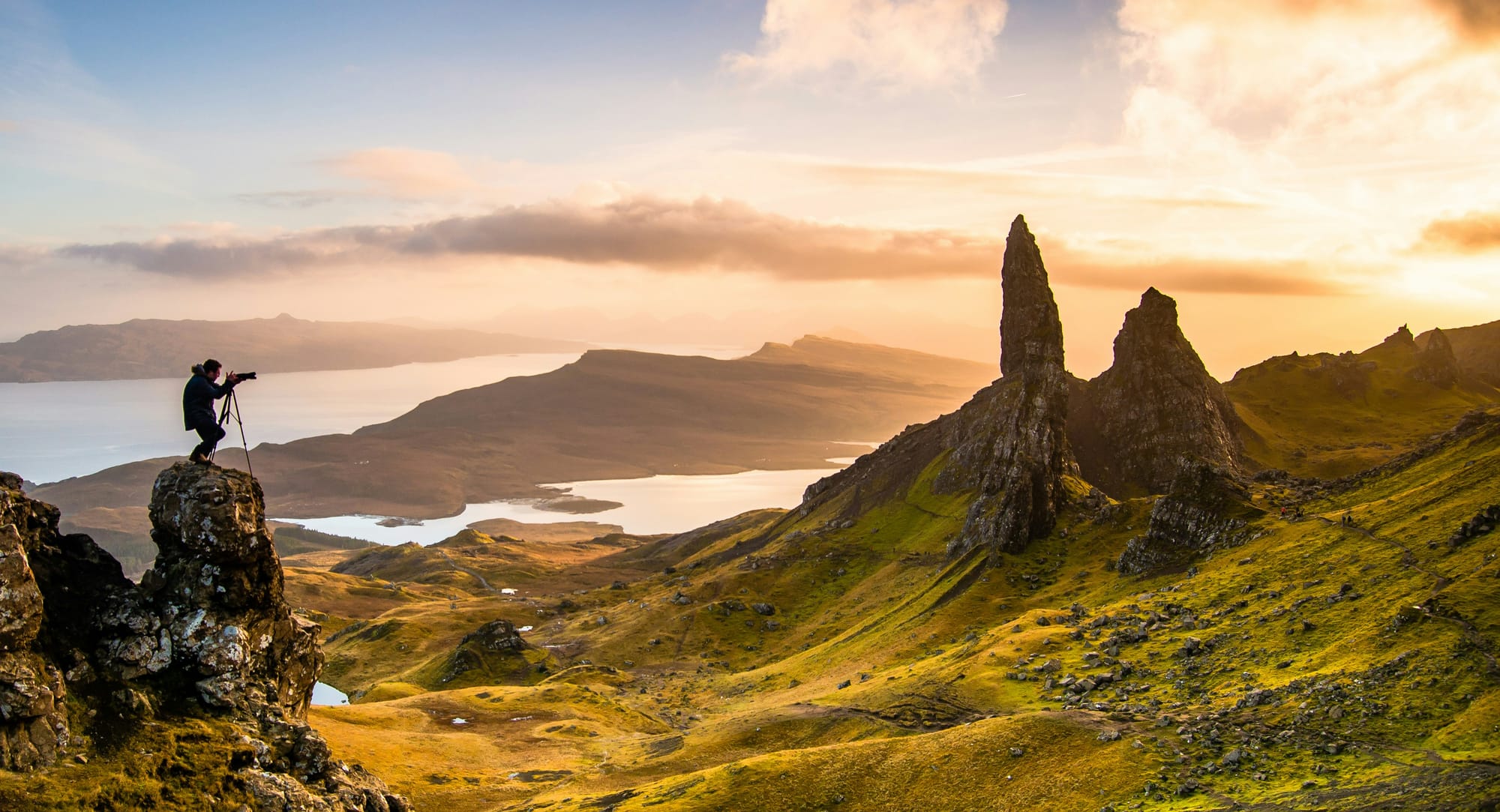
The Old Man of Storr is one of those places that survives its own fame.
This is not always the case. Plenty of widely photographed landmarks end up feeling thinner in person, reduced by repetition, as though the internet has somehow worn them down in advance. Storr is different. Even after all the drone footage and cinematic edits and heavily filtered sunrise shots, the thing still takes your breath away.
Part of that comes from the shape of it. The rock is not elegant. It doesn’t sit nicely in the landscape. It juts upward like an argument. The whole scene feels unstable, as if the earth buckled and never quite corrected itself. There is something vaguely hostile about the formation, which is exactly why it works.
The walk up can be busy, and if you arrive at the wrong time you may find yourself in a polite procession of outdoor jackets and determined breathing. Fine. Ignore that. Keep going. What matters is the moment the wider landscape opens and you realise Storr is not just a rock formation but part of a larger geological mess, all of it lifted, broken, and left leaning toward the sea.
This is not a decorative stop. It has weight. And it's old too. Very old. The kind of old that makes you feel small. Very small.
Quiraing
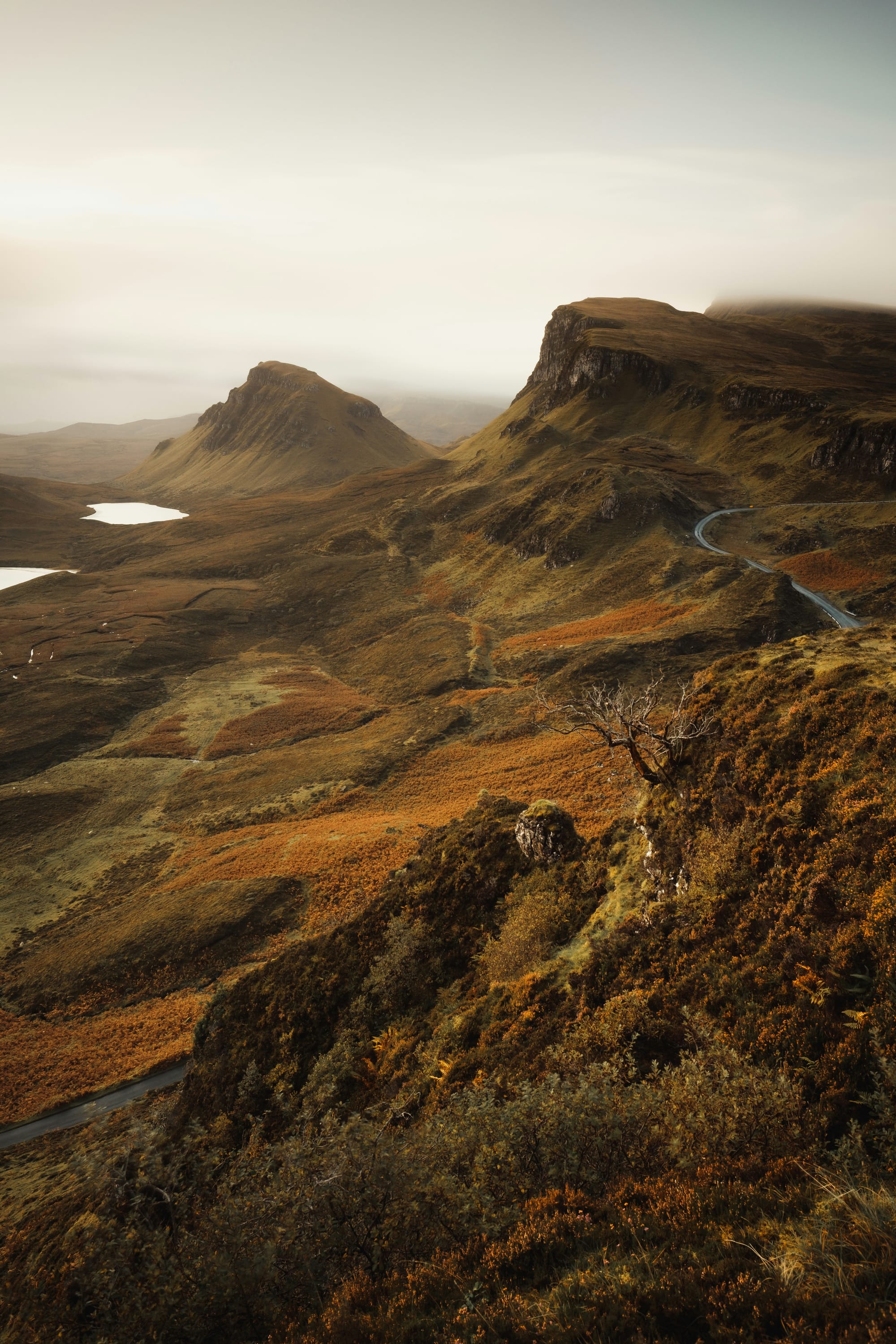
If Storr feels like a threat, the Quiraing feels like the remains of a collapsed world.
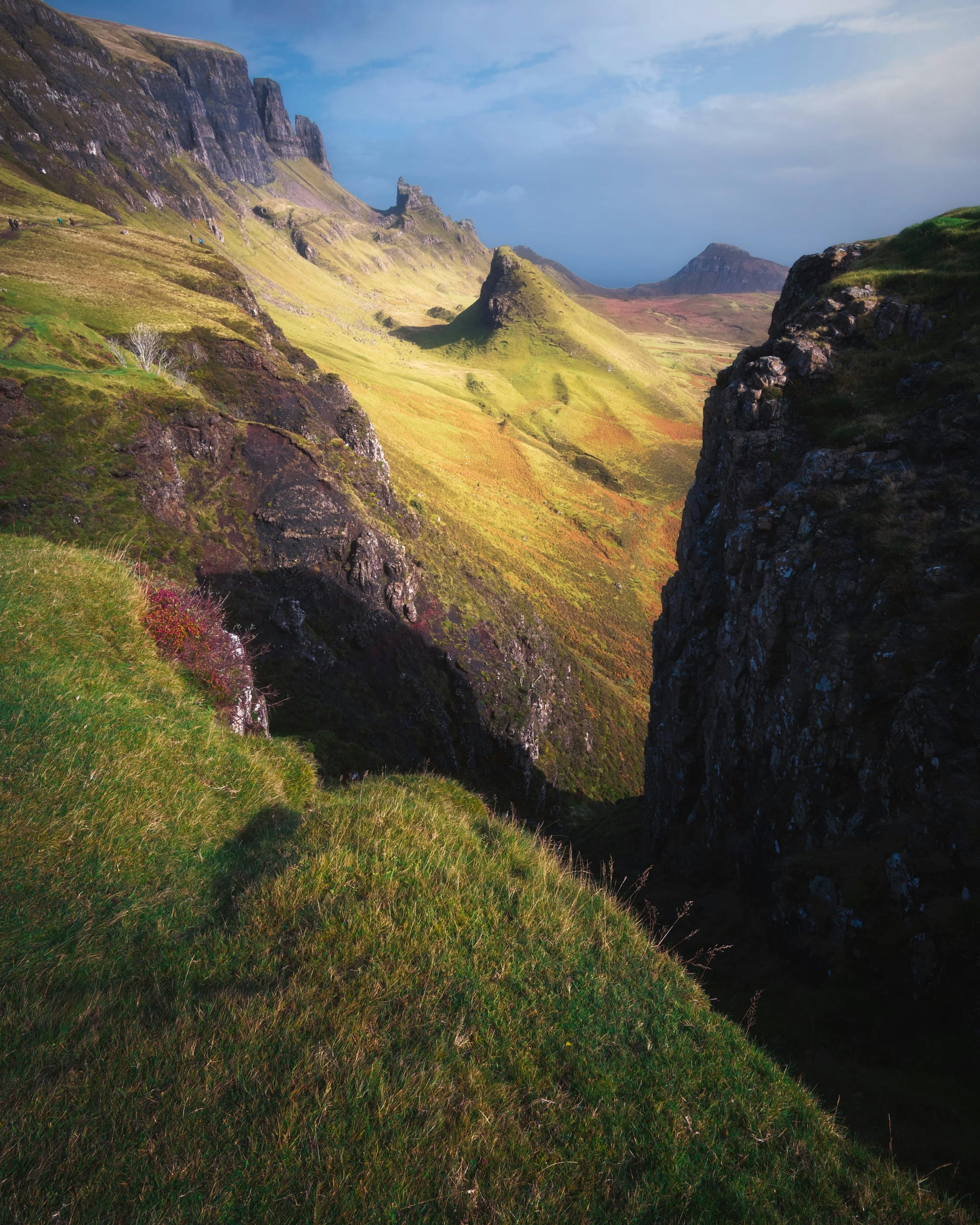
This is landscape at its most physically strange. Not pretty. Strange. The road twists through it as if unsure it belongs there, and the land rises in folds and ruptures that look less like scenery than structural damage. The place has the quality of something half-finished, or half-destroyed.
That is what makes it one of the best places to visit on the Isle of Skye.
The Quiraing is not about one neat viewpoint. It is about scale, shape, and disorientation. The ridges do not reveal themselves all at once. The ground seems to rearrange itself depending on weather and angle. On a clear day, the views are expansive enough to make you go quiet. Under cloud, the place gets meaner and more interesting.
A lot of Skye content treats the Quiraing as visual candy. It isn’t. It is a brute of a landscape. A place that makes human existence look provisional. That is why it lingers.
Portree
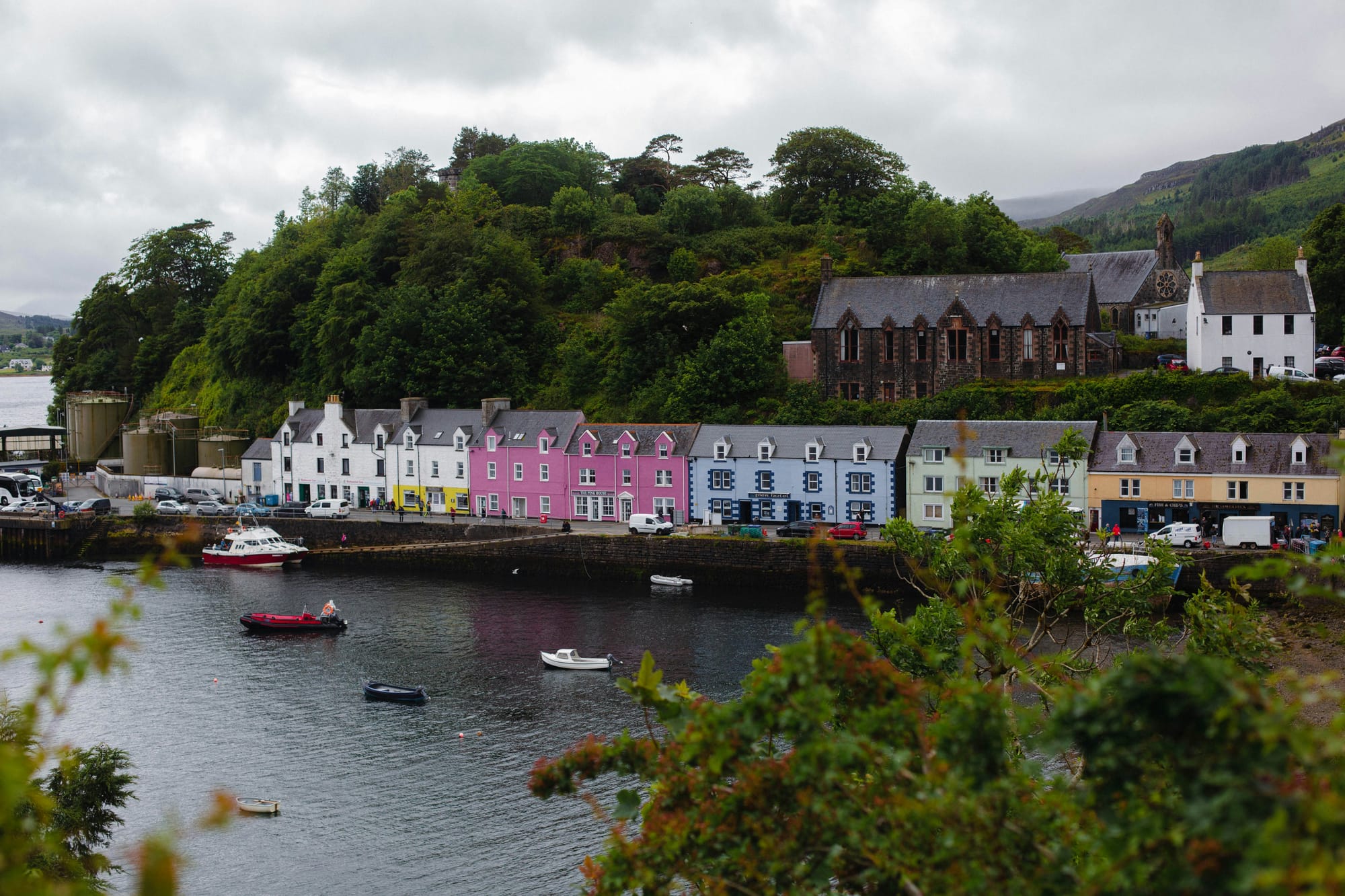
Portree is where Skye puts on a shirt and tries to behave itself.
This does not make it false. Just slightly more civilized than the rest of the island. The harbour, the row of painted buildings, the concentration of hotels, pubs, parked cars, and people looking for coffee all make Portree feel like the practical centre of operations. Which it is.
You will probably eat in it, sleep in it, have a beer in it, or all three. And that is fine. There is no need to sneer at the obvious base just because it is obvious. Portree earns its place by being useful. On an island where distances and road conditions can grind away at your energy, usefulness matters.
Still, Portree is best treated as a staging point rather than the emotional heart of Skye. Come here to regroup. To stock up. To sit somewhere warm and remember that indoors still exists. Have a dram in one of the pubs. The real ones. Places where the patina wasn’t installed by a designer but built up over decades of tobacco smoke, spilled drink, hard weather, local gossip, and songs that have outlived the people who first sang them. Then get fish and chips down by the harbour. Portree has charm, yes, but in a guarded, functional way. Don’t confuse it with the island itself. It is merely where Skye makes room for roads, beds, and dinner.
Neist Point
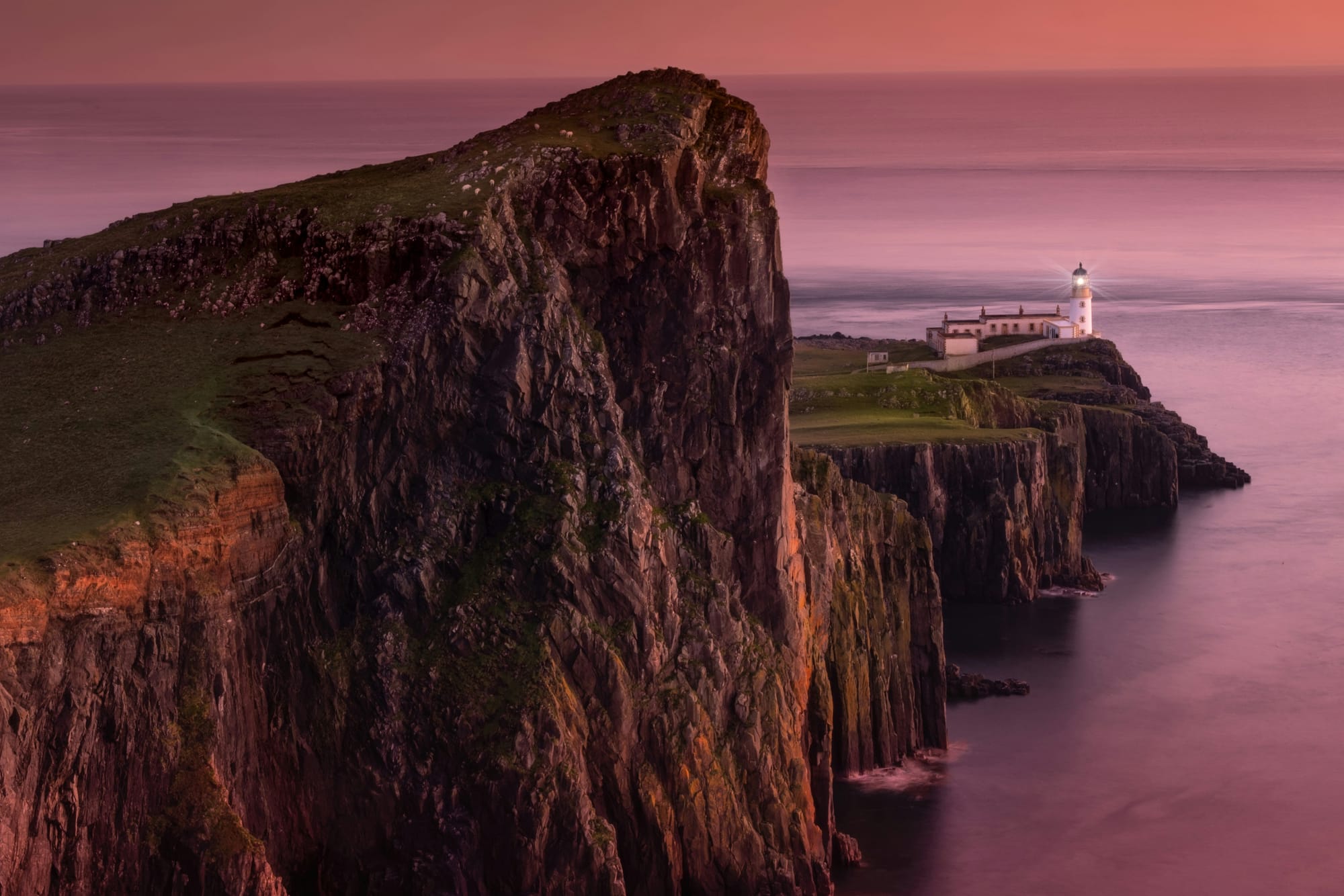
Neist Point is where Skye starts to feel less like a destination and more like an edge.
The lighthouse gets the photographs, naturally. Lighthouses always do. But the real appeal here is the setting. The exposed headland. The drop. The Atlantic pressing in from beyond the frame. The sense that the land has narrowed to a final, wind-beaten statement and then stopped.
There is very little softness here. Which is refreshing.
In good conditions, Neist Point can feel almost theatrical, all cliff line and sea horizon and one pale structure hanging on against the elements. In bad conditions, it is better. More truthful. Less postcard, more weather system. You do not come here for comfort. You come for the sensation of being somewhere emphatically not designed around your convenience.
Stay long enough and the place strips away whatever sentimental nonsense you brought with you.
Fairy Pools
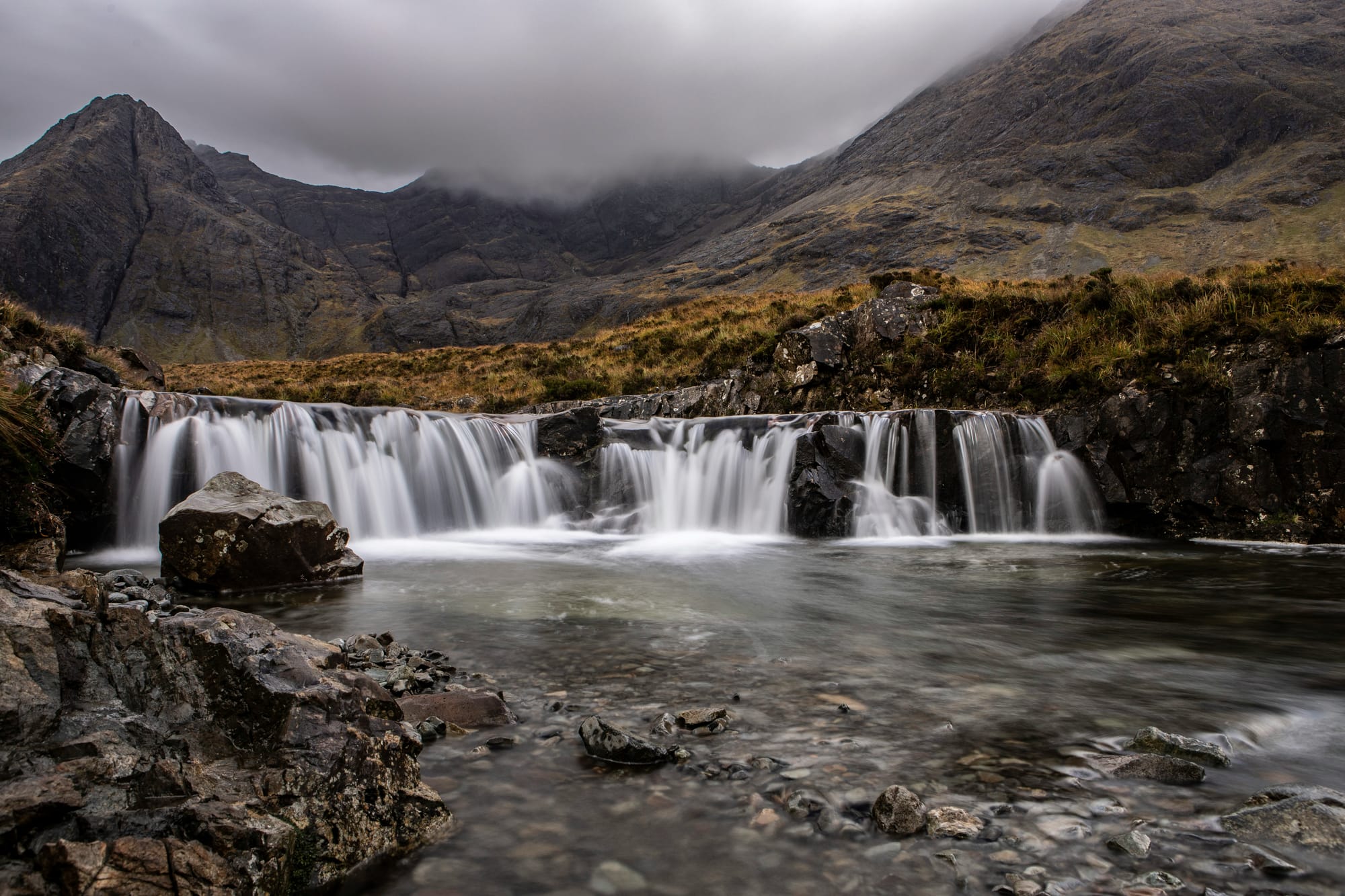
The Fairy Pools may have one of the most regrettable branding decisions in Scottish travel.
The name suggests whimsy. Delicacy. A kind of decorative enchantment. What you actually get is cold water moving through rock beneath the shadow of the Cuillin. Which is far better.
Yes, the place can be crowded. Yes, you may spend parts of the walk negotiating other people’s attempts to have a transcendent experience in active sportswear. But the pools remain worth seeing if you ignore the marketing and pay attention to the setting. The water is clean, sharp, and bright against darker stone. The hills behind them give the whole place muscle. Nothing here feels fragile.
This is the trick with Skye. Some of its most overexposed places are still powerful once you strip away the language used to sell them. The Fairy Pools are not fairy anything. They are a hard, cold, very physical place made more impressive by the mountains looming beyond them.
Treat them that way and they improve considerably.
Dunvegan Castle
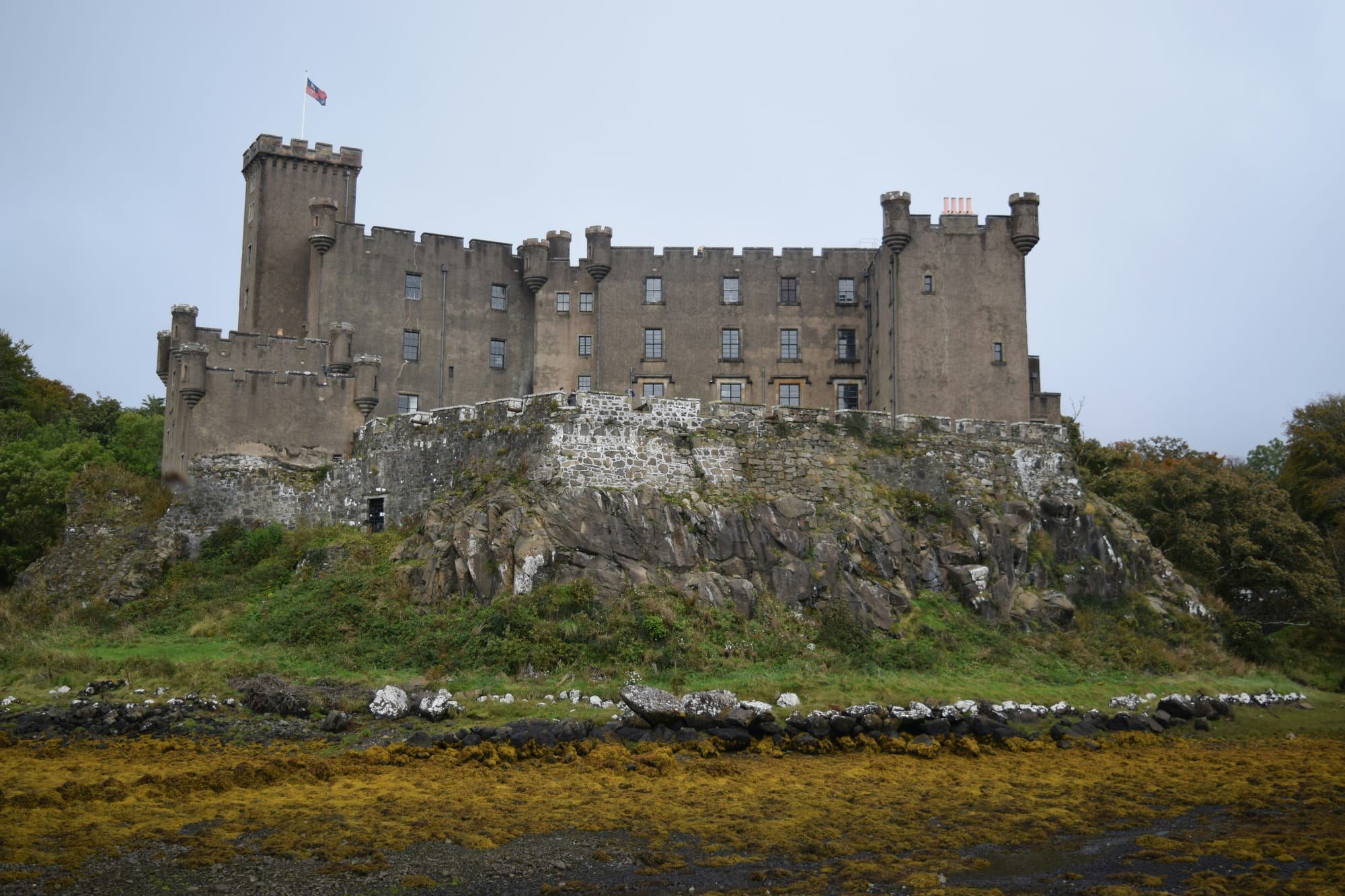
Skye is not just cliffs and geological violence. It is also history. Not the tidy kind. The kind built out of power, land, inheritance, and long memory.
Dunvegan Castle matters because it adds human scale to all that landscape. Not a small scale. A concentrated one. Here is a place shaped not by abstract scenery but by people determined to hold ground and status over generations. A castle on Skye is not some ornamental relic from a gentler age. It is a reminder that islands are political as well as picturesque.
Dunvegan gives you walls, lineage, authority, and a necessary change of texture after too much exposure to open country. It also helps correct one of the lazier assumptions people make about Skye, which is that the island is primarily about natural beauty. It isn’t. Beauty is only one layer. Underneath that, as in much of Scotland, lies hierarchy, conflict, endurance, and the stubborn architecture of control.
In other words, actual history.
The Cuillin
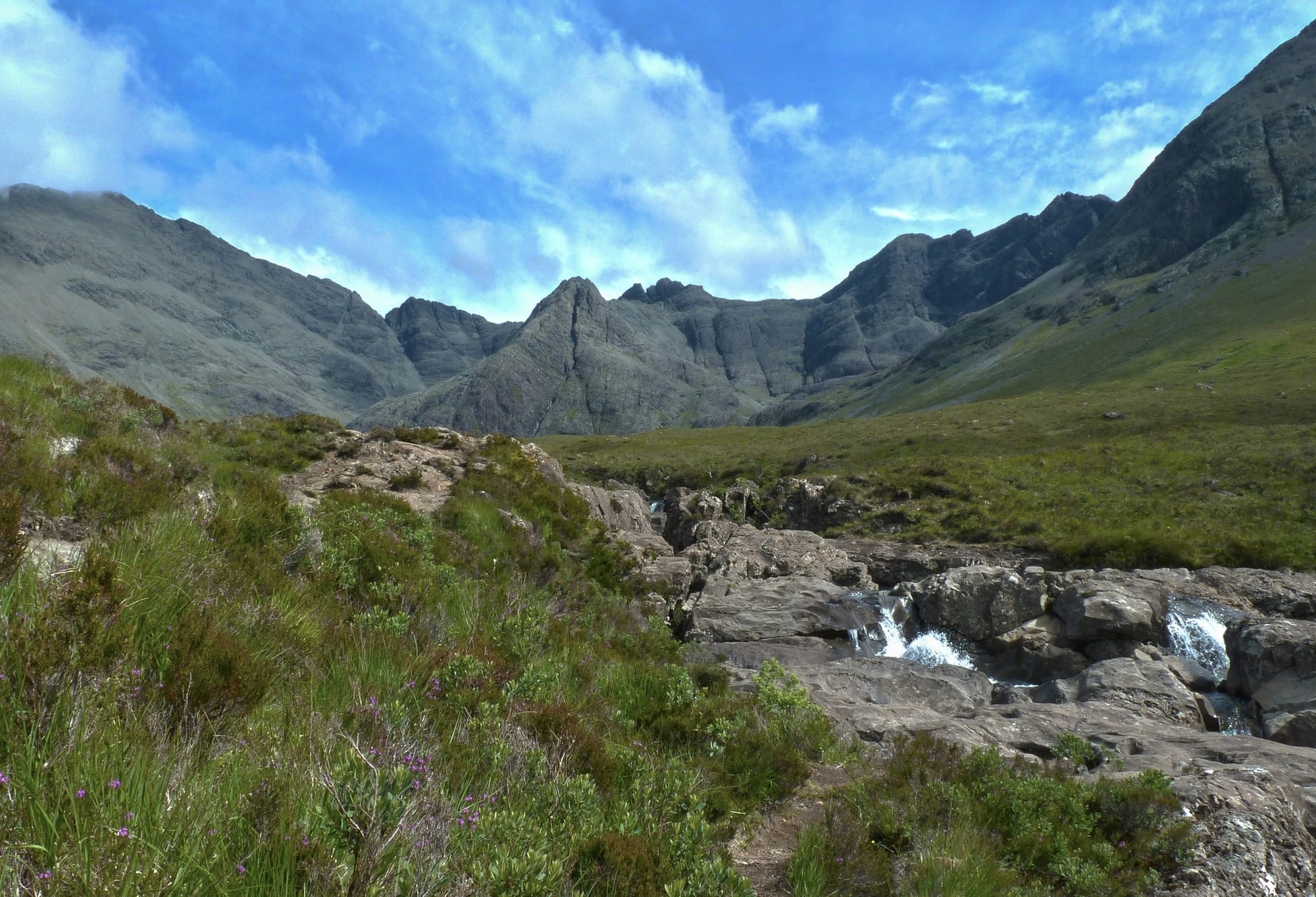
The Cuillin are the psychological centre of Skye.
You can see them from different points across the island, and each time they carry the same message: this is not a toy landscape. The ridgeline is dark, severe, and deeply uninterested in being reduced to a backdrop. Even from a distance, the mountains seem to impose themselves on everything around them.
This is why so many other places on Skye derive part of their force from proximity to the Cuillin. The Fairy Pools are sharper because the mountains are there. The roads around Glenbrittle feel more dramatic because the ridges are hanging over them like a warning. Even people with no intention of climbing anything serious tend to respond to the range instinctively. It changes the scale of the island.
A lot of scenery flatters you. The Cuillin do not.
They remind you there are levels to this. That Skye can be scenic, yes, but also severe, technical, and occasionally indifferent in a way that earns respect. Even if you only view them from below, they are essential.
What most people get wrong about Skye
They try to complete it. That is the mistake.
People arrive with an Isle of Skye itinerary arranged like a military operation. One night. Maybe two. Sunrise here, waterfall there, lighthouse after lunch, pools before dinner, then a late dash back across the island because they have a booking somewhere and a fantasy that roads on Skye operate according to reason.
This is how you ruin the place.
Skye is not improved by speed. It is thinned out by it. Turned into a collection of parking areas and short walks, none of them given enough time to settle. The island’s real character lives in mood, delay, bad light, long drives, exposed ground, the smell of damp air off the water, the way one landscape gives way to another without asking permission. You miss that when all you’re doing is ticking boxes.
There is also a more basic issue. Too many people come to Skye expecting to dominate it with planning. That is cute. Weather can erase half your intentions before breakfast. Traffic can wreck the rest by noon. The best response is not frustration. It is surrender, in moderation.
Choose a few things. Leave room. Let the island breathe a little. Let yourself be inconvenienced. You came all this way. You may as well experience the place rather than simply document your successful completion of it.
Practical tips for visiting the Isle of Skye
Driving matters
Skye is a driving destination. Public transport exists, but it's awful. So get a car. But don't confuse “having a car” with “moving quickly.” That delusion dies early here.
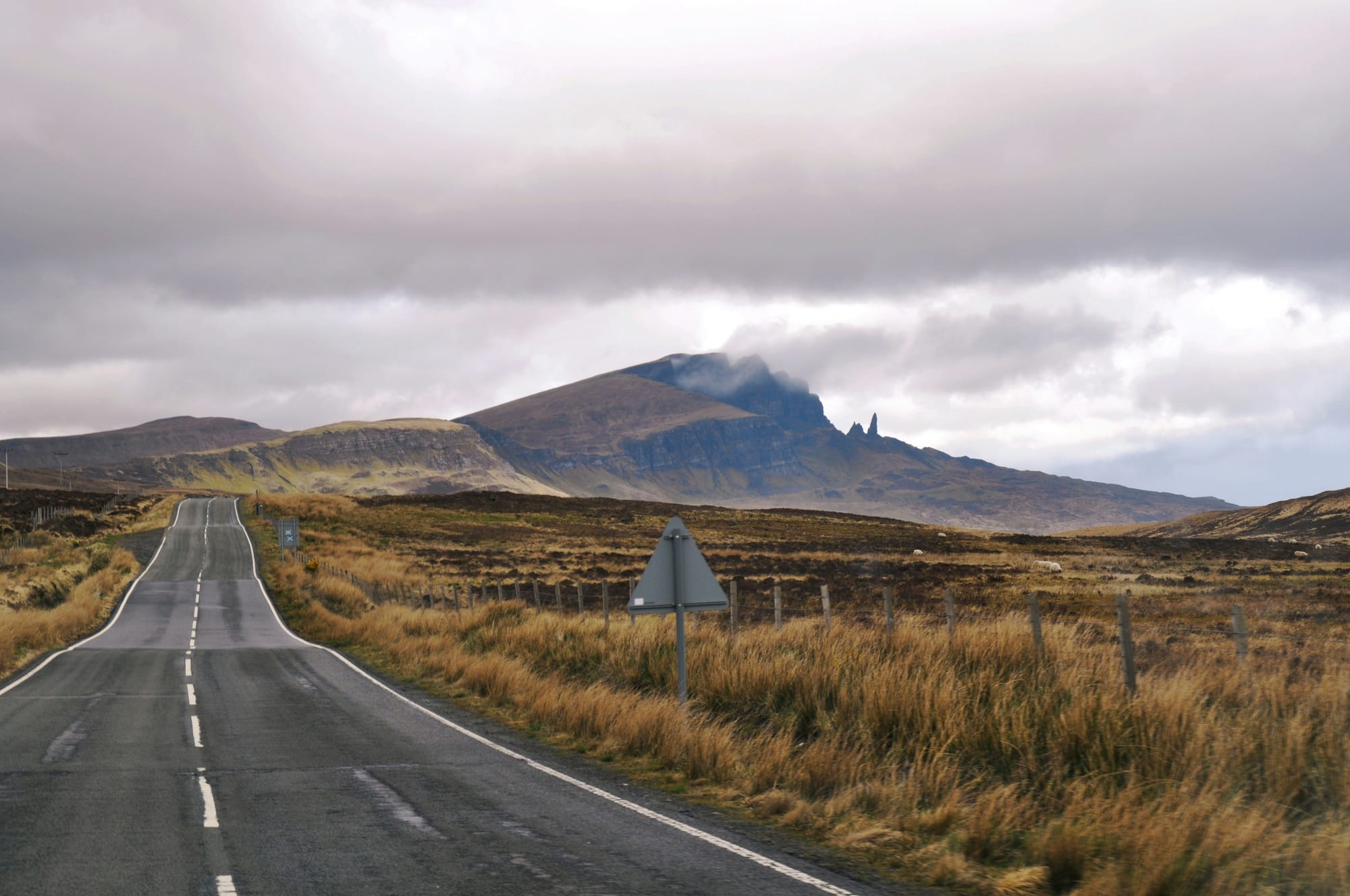
Learn how single-track roads work
This is not decorative local colour. It is road reality. Use passing places properly. Do not park in them. Do not panic when another vehicle appears. Do not behave as though the road system has personally betrayed you. Everyone is dealing with the same thing.
One night is not enough
Can you do Skye in one night? Technically. You can also microwave a steak. The question is not whether it is possible, but whether it is worth doing badly. Two nights is better. Three starts to feel civilized.
Let weather shape the trip
Rigid plans on Skye are a form of self-harm. If visibility is gone, adjust. If a place looks brutal under low cloud, maybe that is the right time to see it. If the day collapses into rain and sideways misery, lean into shorter stops, warmer interiors, and less heroic ambitions.
Stop trying to “cover” the island
Coverage is for insurance policies and military occupations. Skye does not need to be covered. It needs to be experienced with some patience and a tolerance for imperfection. Do less. Notice more. The island rewards that.
Skye is worth the hype, just not for the reasons people usually give
The Isle of Skye is not worth visiting because it is pretty.
Pretty is too weak a word for a place like this, and too flattering. Skye is worth visiting because it has scale. Mood. Pressure. Because it can look ruined by weather one minute and almost biblical the next. Because the roads demand attention. Because the rock feels ancient and unfriendly in a way that sharpens your senses. Because even the famous places can still hit hard if you arrive without too much sentimentality.
People love to describe Skye as enchanting.
Fine. Let them.
A better word would be uncompromising.
That is the real appeal. Not fantasy. Not folklore packaging. Not the easy language of wonder. Skye works because it is larger, darker, rougher, and more indifferent than the version usually sold to visitors. It does not perform charm on command. It gives you cliffs, distance, weather, inconvenience, and the occasional moment so stark it empties your head completely.
Which is more than most places manage.
So go to Skye. See the Old Man of Storr. Drive through the Quiraing. Stand at Neist Point in the wind. Look toward the Cuillin and remember your own scale. Eat something hot. Accept delay. Allow the island to be difficult.
That is when it starts to tell the truth.