Culloden Battlefield
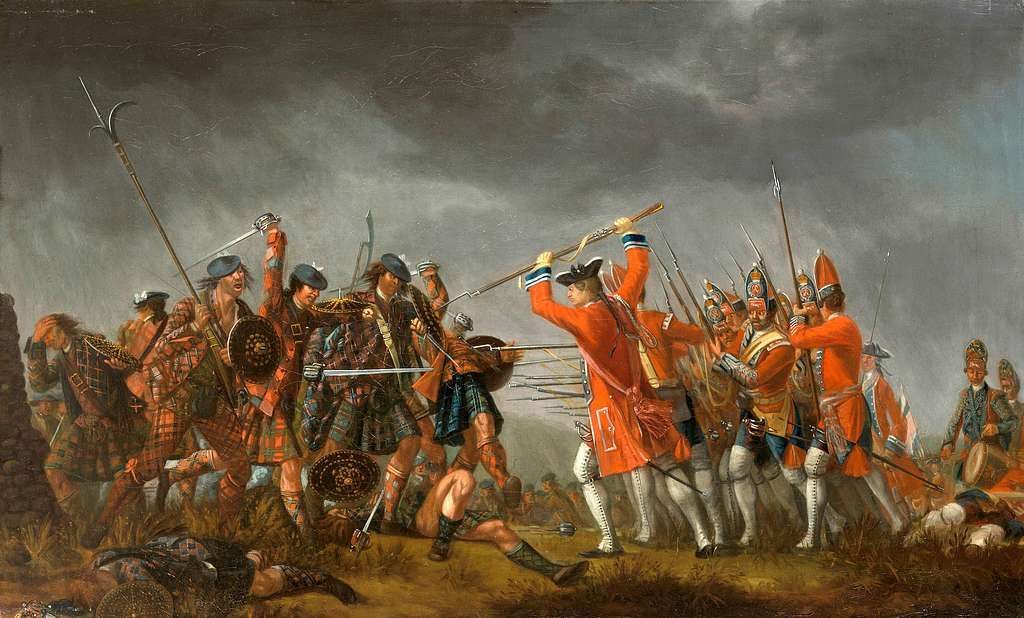
Culloden is not beautiful in any comforting way.
People arrive with all sorts of clutter in their heads. Tartan fog. Clan myth. Heroic last stands. Noble defeat. And all the other nonsense that has gathered around the Jacobite cause for generations, turning hunger, bad planning, dynastic fantasy, and industrial-scale violence into something faintly decorative. Then they step out onto Culloden Moor, and if they have any sense at all, most of that dies pretty quickly.
Because the moor does not cooperate.
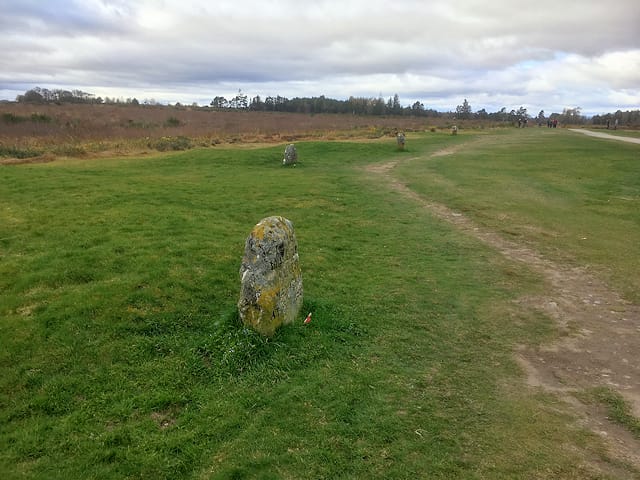
It is flat in the wrong way. Open in the wrong way. Cold. Wind-stung. Exposed. Lacking entirely in the sort of cinematic grandeur people seem to expect from a battlefield tied so tightly to Highland memory. There are no soaring crags here to lend the place romance. No theatrical glen. No mountain backdrop grand enough to make slaughter feel poetic. Just moorland. Distance. Weather. Heather. Mud underfoot when it’s wet. A horizon that offers very little comfort. It feels like the sort of ground where bad decisions would travel a long way and nowhere good.
Which is exactly what happened.
Culloden kills romance dead. This is where the Jacobite Rising ended not in some blaze of tragic glory, but in exhaustion, confusion, failed judgement, artillery fire, shattered bodies, and a political cause broken beyond repair. It is where Charles Edward Stuart, the golden prince of so much bad memory, finally ran out of road. It is where clan loyalty, Stuart ambition, military incompetence, government discipline, and sheer physical misery collided on open ground and ended something for good.
And that finality is still in the place.
You feel it in the emptiness. In the lack of shelter. In the way the land offers no softness, no flattering angle, no place for the imagination to hide from what this battle actually was. Culloden does not encourage fantasy. It strips it off.
That is why people still go.
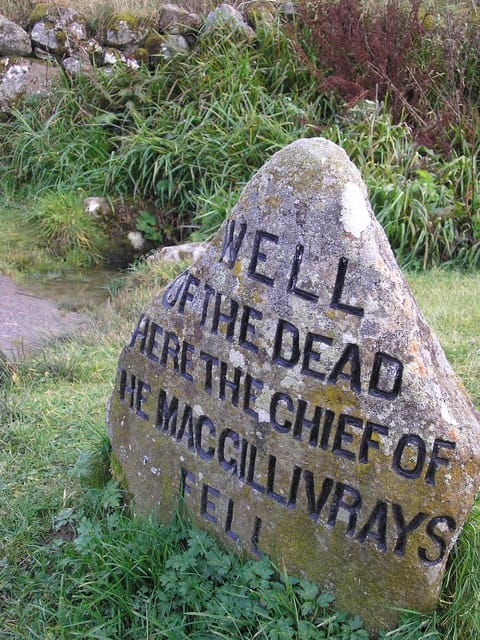
Not only for the history. Though the history is heavy enough. They go because the place itself still feels conclusive. Because the memorial cairn, standing there on the moor, has a way of catching you off guard even if you thought you had arrived in a sensible, historically detached frame of mind. Even if you know better than to let the old Jacobite romance do your thinking for you. You stand there in the wind, with clan grave markers cut into the ground and all that exposed space around you, and the throat tightens anyway. Not because you have wandered into myth. Because you are standing where a dream met grapeshot and state power and ended in mud.
What Culloden feels like now
Culloden Moor feels like an argument against nostalgia.
That may sound severe, but so is the place.
It is not vast in some cinematic, horizon-devouring sense. It is narrower than people sometimes imagine, more intimate as killing ground, which only makes the whole thing worse. The openness is what stays with you. No trees thick enough to hide in. No dramatic folds of land to conceal movement or soften impact. Just exposed ground under a big northern sky, where the weather gets in your face and the eye keeps searching for something solid to hold on to and doesn’t find much.
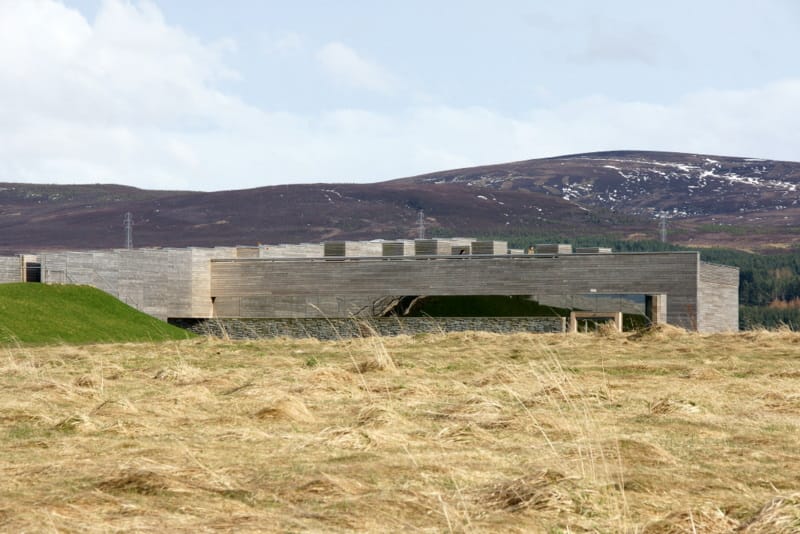
The battlefield today is managed, interpreted, walked. There are paths, markers, the visitor centre, people moving through with maps and audio guides and varying levels of seriousness. Yet the ground resists becoming safe museum space. The moor still has an emotional temperature of its own. On a grey day it can feel almost punitive. On a bright one, the brightness only sharpens the bleakness. There is no good weather for a battlefield like this, only different ways of understanding how exposed the men were.
And exposed is the word.
Exposed to wind. To artillery. To command failure. To timing. To terrain that did not suit the kind of fight the Jacobites needed. Exposed, in the end, to the fact that causes which sound stirring in retrospect are often held together in the moment by tired feet, empty stomachs, confused orders, and men trying to decide whether they are still part of an army or already part of a disaster.
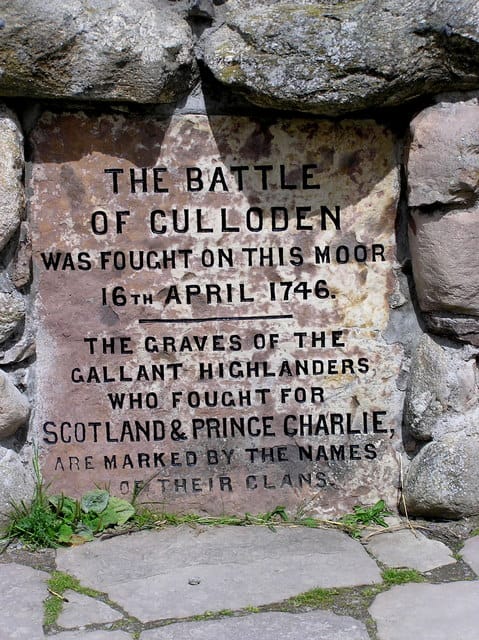
Culloden Moor feels physical in a way some historic sites no longer do. The land still speaks plainly. You do not need much imagination to understand what it meant to stand here hungry and cold, with government guns in front of you and not much room left for error. The place carries that knowledge in its shape.
Then there is the memorial cairn.
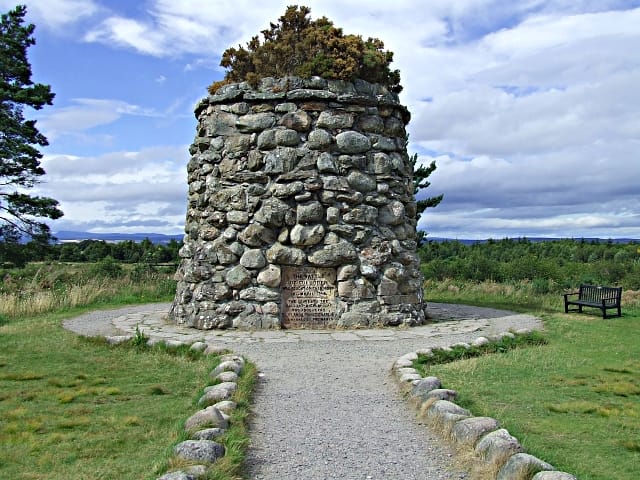
It would be easy, in lesser hands, for a monument like that to tip into sentiment. Easy for it to become merely another stop, another photograph, another moment of respectfully arranged melancholy. It stands among the clan grave markers and the heather and the weather with a kind of blunt solemnity. No hysteria. No theatre. Just the fact of the dead, still named by affiliation if not always individually, still held in communal memory on the same moor where they fell.
And yes, it brings a lump to the throat. But then, I am a Highlander.
Who the Jacobites were, and how this mess began
The Jacobites were, at the simplest level, supporters of the exiled Stuart dynasty.
The name comes from Jacobus, Latin for James, and the roots of the cause go back to the deposition of James VII of Scotland and II of England in 1688.
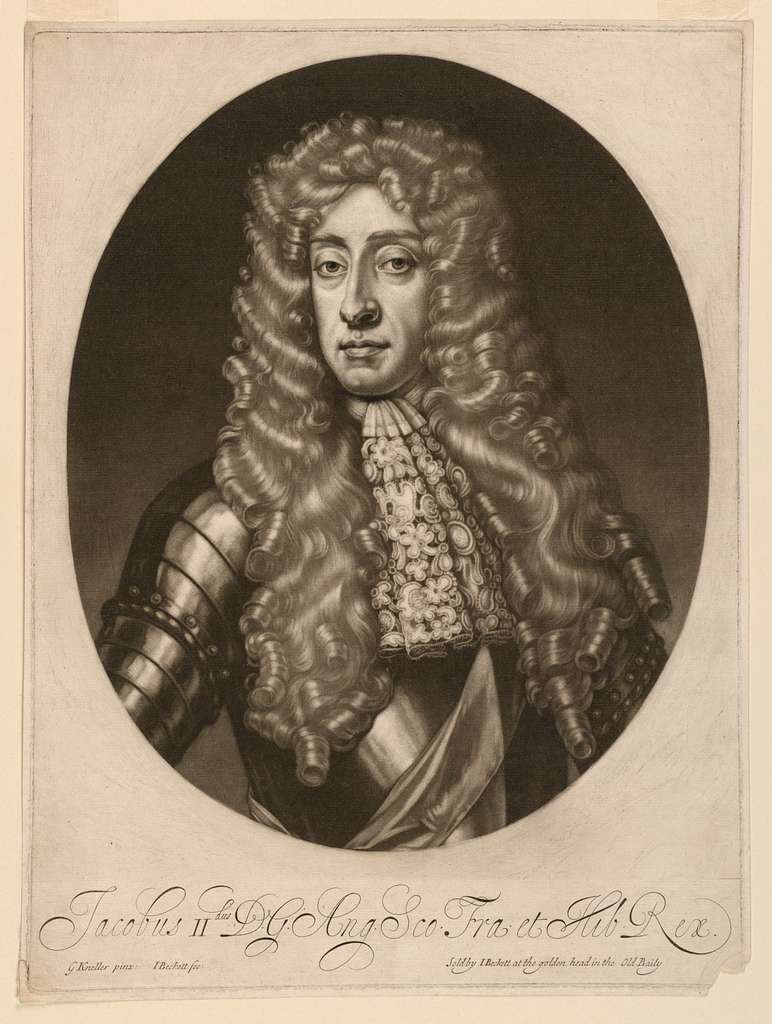
The Stuart line lost the throne, first to William and Mary, then through a succession of Protestant rulers, while a persistent body of supporters kept insisting that the Stuarts remained the legitimate monarchs. Over time, that cause became a complicated blend of dynastic loyalty, political grievance, religious conviction, regional identity, foreign intrigue, and old-fashioned hostility to the new order.
Which is to say: not everyone backing the Jacobites wanted the same thing.
Some were committed royalists. Some were Episcopalians or Catholics hostile to the Protestant settlement. Some Highland chiefs and clans saw opportunity, obligation, or advantage in throwing in with the Stuarts. Some Lowlanders supported the cause too, though Jacobitism is too often lazily reduced to a purely Highland affair. And some people, as ever, simply found themselves caught in the gravitational pull of local power, family, or necessity.
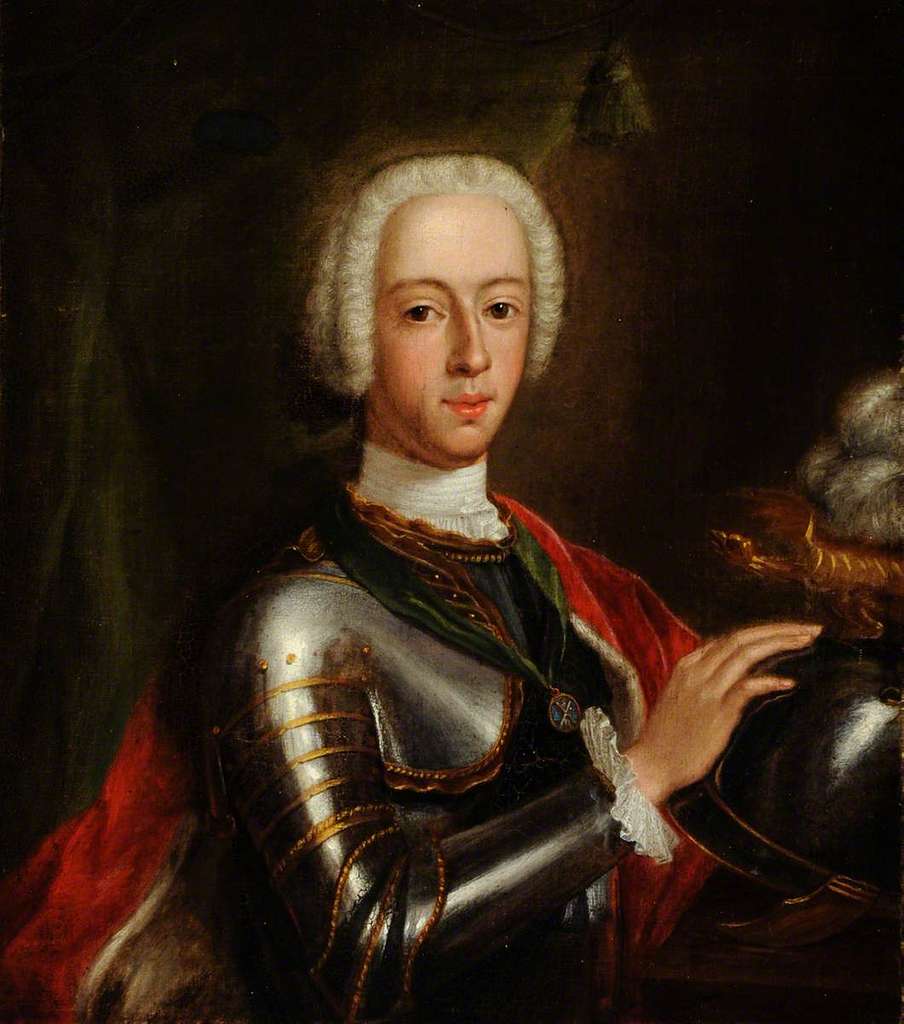
Then came Charles Edward Stuart, Bonnie Prince Charlie if you insist on using the nickname, though the softening effect of that name has done historical memory no favours. He was young, charismatic, reckless, and disastrously confident in the idea that Britain, or enough of it, might rise for his father’s claim if only he landed and acted boldly enough. In 1745, he did precisely that. He arrived in the Highlands, raised his standard at Glenfinnan, and set the Rising in motion.
At first, absurdly, it worked.
The Jacobite army gathered momentum. It took Edinburgh. It beat government forces at Prestonpans. It pushed into England as far as Derby. For a while, the impossible seemed merely difficult. That is often the most dangerous phase of any political fantasy: the point at which enough early success convinces people that logistical reality, strategic weakness, and structural disadvantage can somehow be bullied into retreat by momentum and nerve.
They can’t.
The Jacobites never secured the English support they needed. French backing was insufficient. Internal disagreements worsened. The retreat north began. There were more victories, including Falkirk, but by the spring of 1746 the army was diminished, strained, poorly supplied, and a long way from the bright, volatile confidence of the early Rising. Still, the cause staggered on until it reached the moor outside Inverness, where all the unresolved weaknesses finally came due at once.
Why the battle happened here, and why this ground was wrong
Culloden Moor was a bad place for the Jacobites to fight.
That is one of the most important facts about the battle, and one too often blurred by the haze of later romance. The Jacobite army, especially its Highland core, was at its most effective in fast, aggressive, close-quarters fighting. The Highland charge, for all the mythology built around it, was not theatrical nonsense. It was a real tactical threat under the right conditions: rapid advance, broken or advantageous ground, momentum, ferocity, shock.
Culloden offered them very little of that.
The terrain was open and boggy in places, poor for the sort of swift, coordinated attack the Jacobites needed if they were to get in among government troops before artillery and musket discipline tore them apart. Worse, the army that arrived here was already in bad condition. There had been a failed night march to Nairn intended to surprise the Duke of Cumberland’s forces. It collapsed into confusion and exhaustion. Men straggled back hungry, cold, and sleep-deprived. Some never got back into position at all. Others arrived too late, too depleted, too empty to fight properly.
This matters more than heroic memory likes to admit.
Battles are not decided only by courage. They are decided by food, timing, ground, command, weather, rest, ammunition, and whether the people giving orders are living in reality. The Jacobites at Culloden were badly placed, badly served by circumstance, and not especially well served by leadership either. Charles wanted battle. Some of his commanders had grave doubts. The army was in no condition for the kind of contest Cumberland wanted and was well equipped to win.
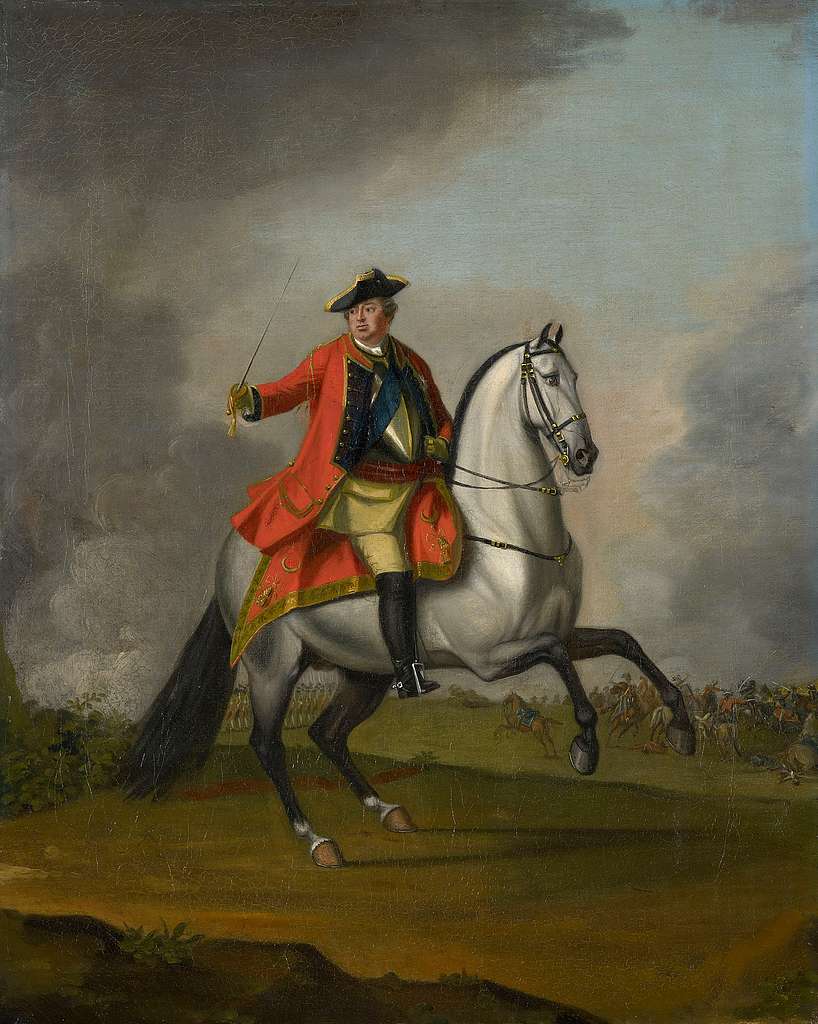
And Cumberland, for all the ugliness of his later reputation, was no fool on the day of battle. His government army was better supplied, better rested, better drilled, and better equipped for disciplined line fighting on open ground. He had artillery superiority. He had men trained to receive and break a charge. He had the sort of institutional military advantage that tends to matter a great deal when your opponent is running on loyalty, fatigue, and diminishing options.
Culloden Moor was not just where the battle happened. It was one of the reasons the battle ended the way it did.
The battle itself, brief and appalling
The Battle of Culloden on 16 April 1746 was brutally short.
That, too, cuts against the instinct to romanticise it. Great causes, people seem to think, ought to die slowly and with elaborate gestures. Culloden was quicker, meaner, and more chaotic than that.
The government artillery opened first and made its superiority felt early. The Jacobites, already badly placed, endured sustained fire they could not answer effectively. Men were being killed and mangled while standing in line, waiting under conditions no army enjoys and a weakened one can hardly bear. This is one of the ugliest phases of battle, before movement, when the body understands the danger before command has converted fear into action.
Eventually, the Jacobites advanced.
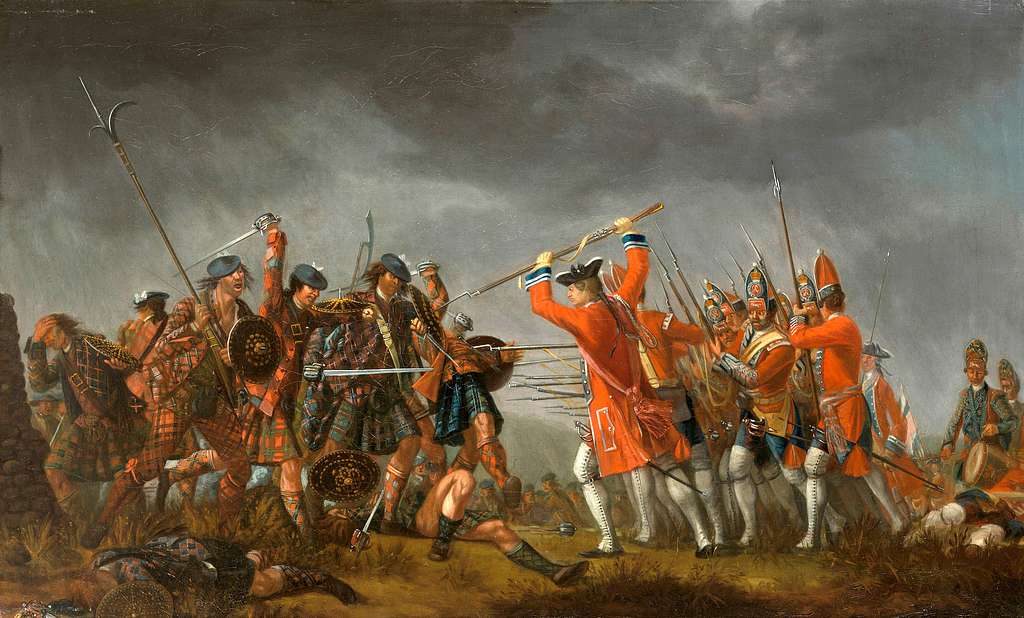
But the advance was uneven, disordered, and shaped by the ground. Some regiments struggled through boggier sections. The alignment broke down. The charge, where it landed, still had ferocity. Some Jacobite troops smashed into parts of the government front with the violence that had made Highland assaults feared. But it was not enough, not broad enough, not clean enough, and not supported well enough across the line.
Government troops had prepared for this. They were drilled to fire, hold, and exploit the disorder created when a charge lost cohesion. Musketry and grapeshot tore gaps in the Jacobite ranks. The government line bent in places, then recovered. Countermeasures worked. Flanking fire bit hard. What had begun as a desperate attempt to close quickly became a killing zone.
And then it collapsed.
That is the word. Not faded. Not ebbed. Collapsed.
Once momentum failed, the Jacobite army ceased to be a coherent fighting force and became a wreck of retreating, falling, trapped, or fleeing men under continued attack. What had been a battle became a rout. The whole thing was over in under an hour. A cause that had marched into England months earlier ended here in a chaos of smoke, screaming, mud, blood, and men cut down on ground that had offered them almost nothing.
This is why Culloden feels so terminal. Not only because the Jacobites lost, but because they lost so completely and so fast once the fatal engagement truly began. There is no room here for the sort of memory that likes defeat polished into grandeur. The reality was uglier. A military disaster. A political collapse. The violent snapping shut of a narrowing set of possibilities.
The aftermath, where the real hardness begins
Culloden did not end when the firing stopped.
That is essential to understand, because part of what gives the battlefield its lasting weight is that it marks not merely the defeat of an army, but the beginning of a far harsher phase for the Highlands.
In the immediate aftermath, many wounded Jacobites were killed on the field or in pursuit. Cumberland’s reputation for severity, already forming, hardened into something darker. He would become “Butcher Cumberland” in Jacobite memory, and not without reason. The government response to the rebellion was not content with victory in battle. It aimed to break the social and military structures that had sustained the Rising in the first place.
Reprisals followed. Suspects were hunted. Prisoners were executed, transported, or imprisoned. Arms were seized. The old clan system, never quite as simple or romantic as later nostalgia would have it, came under intensified pressure. Heritable jurisdictions were attacked. The wearing of Highland dress was restricted under the Dress Act. The carrying of weapons was curtailed. The state moved with much greater determination to dismantle the conditions under which another Jacobite rising might be mounted.
And here the romance fails again.
Because Culloden is often remembered as the end of a dream. It was that, perhaps. But it was also the extension of state power into Highland life with renewed force and purpose. The battle became a gateway to suppression, reordering, and humiliation. Whatever the Jacobite cause meant to those who fought for it, what came after meant surveillance, punishment, and cultural pressure imposed by a victorious government no longer interested in treating the Highlands as a semi-detached problem.
This does not mean every later Highland hardship can be lazily dumped at Culloden’s door. History is not that tidy. But Culloden undeniably marks a decisive rupture. The end of the Jacobite military project. The end of serious Stuart hopes in Britain. The end, too, of one phase of Highland autonomy and armed political significance.
What most people get wrong about Culloden
Culloden is not compelling because it is romantic.
It is compelling because it isn’t.
This is where the old Jacobite dream hit the ground and discovered that dreams do very badly against artillery, exhaustion, bad terrain, and a state determined to finish the job. This is where Charles Edward Stuart stopped being the dazzling prince of later memory and became, in effect, the leader of a broken cause. This is where clan loyalty met the limits of courage under catastrophic conditions. This is where Cumberland’s army proved more disciplined, more prepared, and more lethal on the day that mattered.
And this is where something ended.
Not all at once, not in every sense, and not without aftershocks. But ended all the same. The battlefield still carries that feeling. Final. Wind over heather. Open ground. Clan stones. The memorial cairn. The stubborn fact that a place can absorb myth for centuries and still keep hold of its harder truth.
Which is why Culloden stays with people.